
Tonight is one of the more genuinely rewarding nights of the year to lie back and watch the sky do something extraordinary. The 2026 Lyrid meteor shower — the oldest continuously observed meteor shower in recorded history, with Chinese astronomical records documenting it as far back as 687 BCE — peaks on the night of April 21–22, 2026. According to The Planetary Society’s 2026 Lyrid guide, this year’s waxing crescent Moon will not interfere significantly with the display, making conditions considerably more favourable than several other major showers later in the year.
If you’ve tried meteor watching before and came away underwhelmed, the problem almost certainly wasn’t the shower. It was timing, location, or both. This guide addresses exactly that.
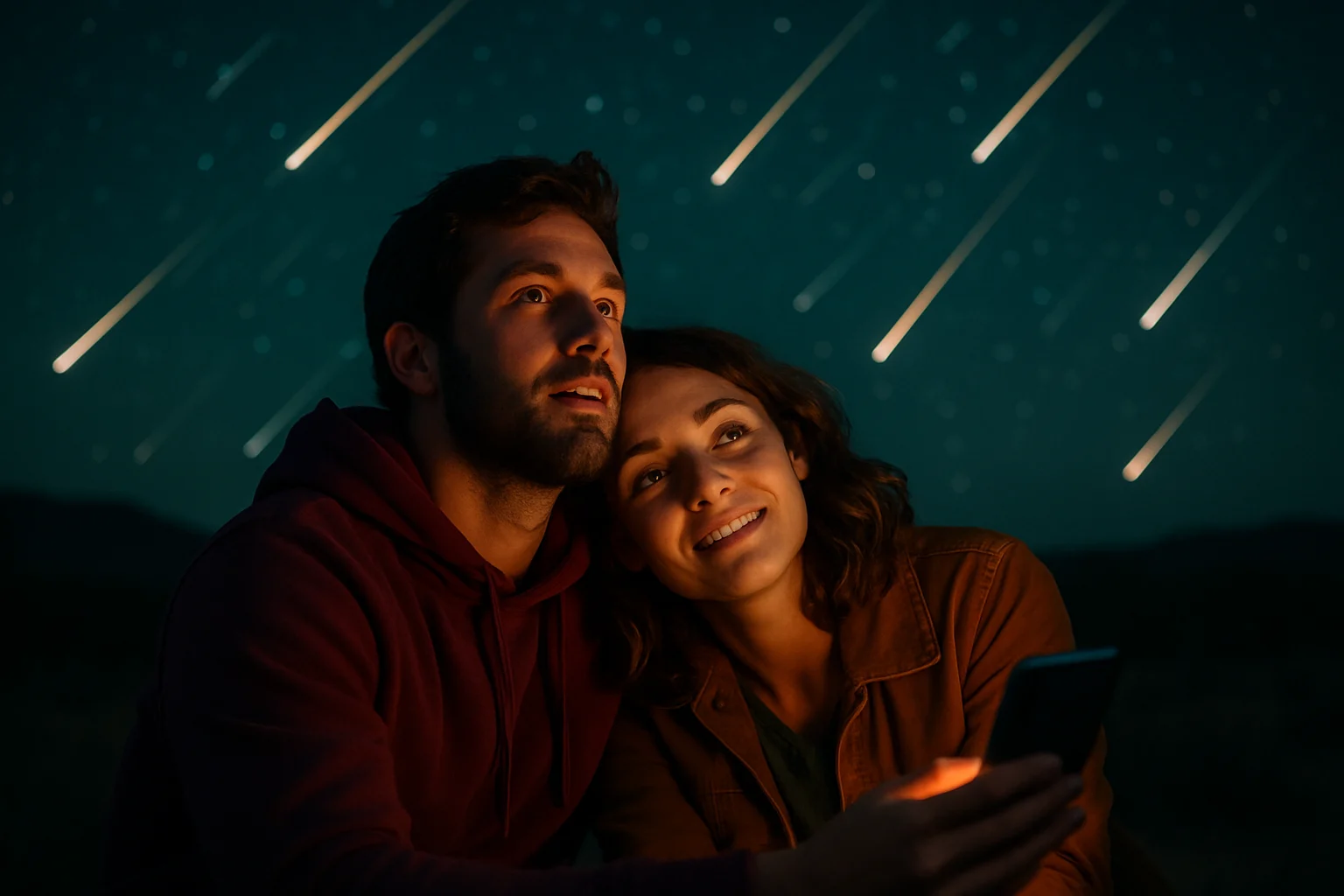
What Is the Meteor Shower Tonight? The Lyrids, Properly Explained
The Lyrid meteor shower runs from April 14 to April 30 each year, with peak activity concentrated tightly around April 21–22. The shower takes its name from the constellation Lyra — specifically the area near the bright star Vega, which marks the shower’s radiant point: the perspective location in the sky from which all meteors appear to diverge outward.
What causes it? Comet Thatcher, formally catalogued as C/1861 G1. When this comet passes through the inner solar system, it sheds rocky and icy debris along its orbital path. Earth crosses that debris trail every April, and the particles — most no larger than a grain of sand — slam into our upper atmosphere at approximately 49 kilometres per second. The friction vaporises them in a streak of white light. That’s your shooting star.
The comet itself is on an exceptionally long orbit. The Planetary Society notes that Comet Thatcher has not completed a full orbit since its 1861 discovery and is currently estimated to be less than halfway through its journey, with the widely cited orbital period figure being approximately 415 years. The debris trail it left, however, faithfully arrives every April regardless.
“The Lyrids are expected to produce up to 15 meteors per hour at a dark site, though sometimes up to 100 per hour are seen under ideal conditions. A waxing crescent Moon will not interfere much with the display, so it should be possible to see plenty of meteors around the shower’s peak this year.” — The Planetary Society, The Lyrid Meteor Shower 2026: How to Watch
That upper-end figure of 100 per hour is real but rare — it reflects documented Lyrid outbursts where Earth passes through an unusually dense clump of debris. These outbursts are not predictable in advance and occur sporadically; the International Meteor Organization (IMO) records historical instances but does not publish a fixed recurrence interval. The typical published rate is up to 15 meteors per hour under genuinely dark skies, as stated by The Planetary Society. Modest compared to August’s Perseids or December’s Geminids — but the Lyrids have something those showers occasionally lack in 2026: a cooperative Moon.
The 2026 Lyrid meteor shower peaks tonight, April 21–22. This year’s waxing crescent Moon keeps sky conditions dark through the critical pre-dawn viewing window — a genuine advantage over several upcoming 2026 showers where Moon illumination exceeds 80%.
When to Watch the Meteor Shower Tonight: The Timing Most People Get Wrong
The single most common reason people come away from meteor showers disappointed isn’t weather, light pollution, or bad luck. It’s going outside too early, seeing very little in the first 20 minutes, and concluding the whole thing was overhyped.
Meteor shower rates are not uniform across the night. They follow a predictable curve tied to Earth’s rotation. As your location rotates to face more directly into the oncoming debris stream — which happens progressively through the night — the rate climbs. The radiant point near Vega also rises higher above the horizon as the night progresses, and a higher radiant means meteors streak across more of the sky rather than skimming low near the edge.
According to EarthSky’s 2026 meteor shower guide, the best time to watch is after midnight and before dawn on the morning of April 22. The Farmers’ Almanac similarly places peak viewing between 2 a.m. and 5 a.m. local time for most Northern Hemisphere locations. These aren’t arbitrary windows — they reflect the geometry of Earth’s rotation relative to the shower’s radiant.
Set two alarms tonight: one for midnight to get outside and begin dark adaptation, and a second for 2:30 a.m. for the genuine peak. Dark adaptation takes a minimum of 20–30 minutes — the longer you stay away from artificial light, the more meteors become visible to the naked eye.
Here’s something that most beginner guides bury or skip entirely: you should not stare directly at the radiant point. This is one of the most counterintuitive things about meteor watching, and getting it wrong will genuinely halve your enjoyment. Meteors appear to shoot outward from Vega, but staring directly at Vega means you see only the short, stubby tails of meteors coming almost straight toward you — the least dramatic version of the same event. Look instead about 40–50 degrees away from the radiant, anywhere in the broad sky, and you’ll catch the long arcing streaks that make the whole exercise worth the lost sleep. This principle applies to every named shower, not just the Lyrids.
A Practical Timeline for Tonight
The following breakdown reflects the general observational pattern for Lyrid peak nights, based on how radiant altitude and Earth’s rotation geometry affect visible rates. Treat hourly figures as rough guides rather than precise measurements — actual rates vary by location, sky darkness, and observer experience:
 美國即時熱搜
 美國即時熱搜
 美國即時熱搜
 美國即時熱搜
| Time Window (Local) | Typical Activity Level | What to Expect |
|---|---|---|
| 10 pm – Midnight | Low | Radiant still rising; occasional early meteors possible, mostly near horizon |
| Midnight – 2 a.m. | Building | Rates climbing as radiant gains altitude; worthwhile for casual watchers |
| 2 a.m. – 5 a.m. | Peak | Highest rates of the night; Lyra well-placed in the northeast sky |
| After 5 a.m. | Declining | Dawn twilight brightens the sky; activity still present but harder to see |
The Moon sets relatively early on the night of April 21–22 this year given its waxing crescent phase, meaning the sky gets progressively darker as the night deepens. This is the structural opposite of a full Moon night, where conditions worsen as the Moon climbs. For the Lyrids in 2026, that geometry works in your favour.
Where to Watch the Meteor Shower Tonight: Location Is Half the Battle
Light pollution doesn’t just reduce the number of meteors you can see — it compresses the effective sky into a smaller, brighter dome. The published Zenithal Hourly Rate (ZHR) of up to 15 meteors per hour assumes a sky dark enough to see the Milky Way clearly overhead, with the radiant at the zenith. Very few urban or suburban locations meet that standard.
The practical consequence is stark: a city-centre observer might see two or three meteors per hour on a Lyrid peak night, while someone in genuinely dark countryside could see closer to ten or twelve. Those figures represent reasonable estimates based on standard Bortle scale modelling of how sky background brightness affects limiting magnitude and effective ZHR — they are not independently sourced data points, and your actual count will vary. But the directional gap is real and consistently documented by amateur astronomy groups. It’s the difference between a memorable night and a forgettable one.
How to Find a Dark Viewing Site
The American Meteor Society maintains detailed viewing guidance and links to dark sky resources. For practical site-finding, the Light Pollution Map at lightpollutionmap.info overlays Bortle scale data on satellite imagery — you’re looking for green or grey zones (Bortle 4 or lower) within a reasonable drive. Even a Bortle 5 site is a significant improvement over a Bortle 8 city sky.
Practically, prioritise:
- Open, elevated ground — hilltops, open fields, or moorland with unobstructed sky in all directions
- National parks and forest edges — naturally low artificial lighting, often with good road access
- Coastal headlands facing away from towns — the ocean side provides zero light pollution from that direction
- Sites shielded from road traffic — passing headlights reset dark adaptation instantly and completely
Avoid using your phone screen during the session. Even a brief glance at a bright display destroys dark adaptation, requiring another 15–20 minutes of recovery. If you need light, use a red-light torch: red wavelengths have minimal impact on rhodopsin, the eye pigment responsible for night vision.
Northern vs Southern Hemisphere: Who Gets the Best View?
The Lyrids are primarily a Northern Hemisphere shower. The radiant near Vega sits high enough above the horizon for observers in Europe, North America, and northern Asia to see good rates through the pre-dawn hours. Southern Hemisphere observers aren’t entirely excluded — The Planetary Society notes that some meteors may be visible from the Southern Hemisphere — but the radiant stays low or below the horizon for much of the night, which substantially reduces the observable rate. If you’re south of the equator, look toward the north after local midnight and adjust expectations accordingly.
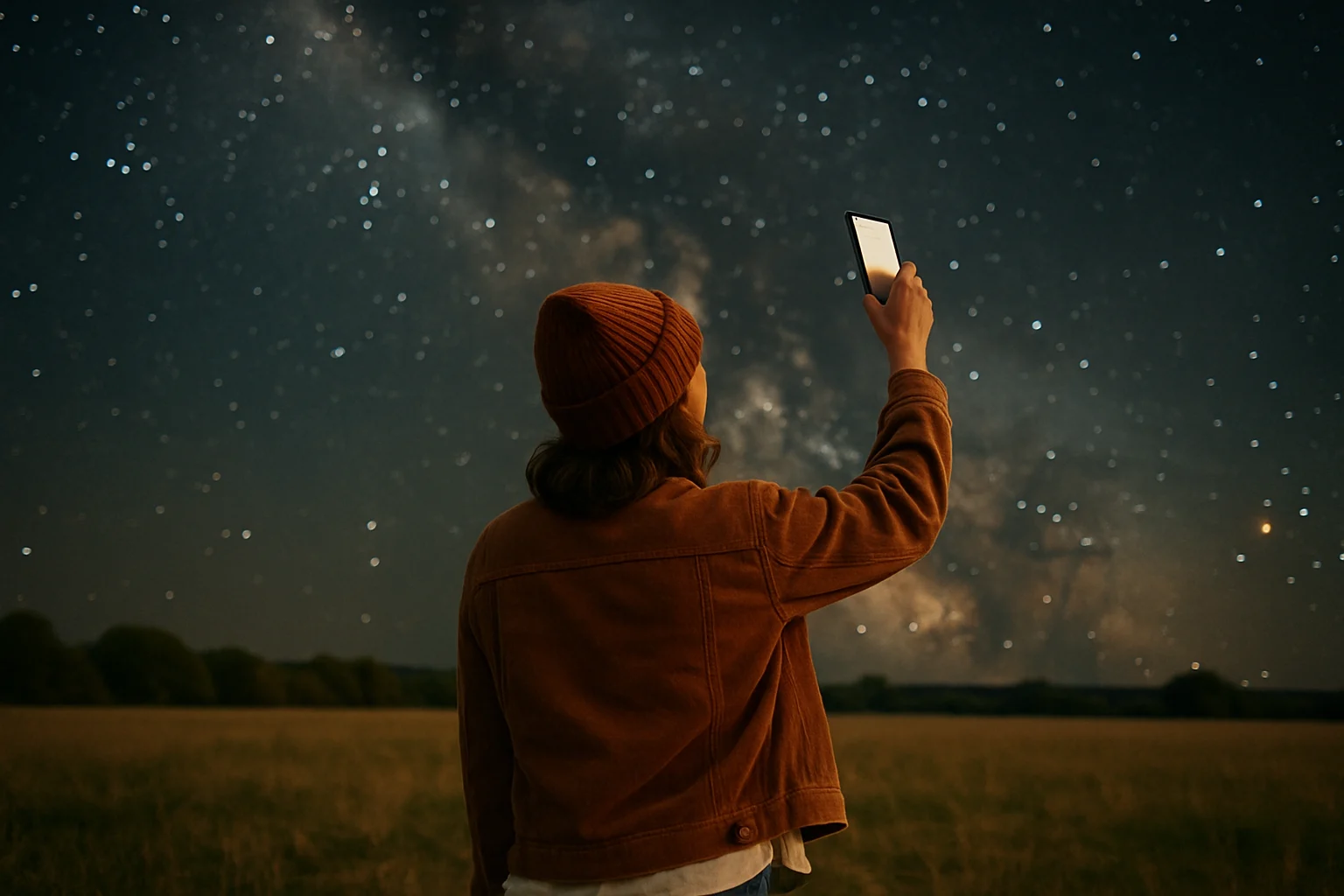
The Meteor Shower Tonight Viewing Kit: What Actually Works
No telescope. No binoculars. This is worth stating plainly because the instinct when doing anything astronomy-related is to reach for optical equipment. For meteor showers, that instinct actively works against you. A meteor crosses a 30-degree arc of sky in under a second — a telescope’s field of view is typically less than one degree. You will miss everything while you’re looking through it.
What the kit needs to solve is comfort and cold management, not optics:
- A reclining garden chair or foam sleeping mat — lying flat on your back, facing upward, is the only sustainable position for a two-hour session; craning your neck while standing guarantees you leave early
- More warm layers than seems necessary — April nights in the Northern Hemisphere, particularly after 2 a.m., are cold; clear skies accelerate radiative heat loss from the ground and temperatures can drop sharply even in mid-spring
- A sleeping bag or heavy blanket — for wrapping around yourself while lying down
- A red-light torch — for navigation without destroying night vision
- A hot drink in a sealed flask — practical and morale-sustaining at 3 a.m.
- A sky app set to red-screen mode — to locate Lyra initially, then set it face-down for the rest of the session
A common pattern among first-time meteor watchers: they go out at 10 p.m., see nothing for 15 minutes, conclude the shower is a bust, and go inside — missing the peak entirely by nearly four hours. The fix is simple: plan from the outset to stay until at least 3 a.m., dress for it accordingly, and treat midnight as the warm-up rather than the main event.
What’s Coming After Tonight: The 2026 Meteor Shower Season in Context
The Lyrids mark the opening of the year’s main meteor watching season. Understanding what comes next helps contextualise why tonight, specifically, is worth the effort.
The Eta Aquariids peak on May 5–6. They’re produced by debris from Halley’s Comet and can generate up to 50 meteors per hour under ideal conditions — more than three times the Lyrid rate. According to the American Meteor Society’s 2026 meteor shower calendar, the Moon will be 84% illuminated at the Eta Aquariids’ peak, significantly washing out fainter meteors and making practical observation considerably harder than the raw rate figure suggests.
The Southern Delta Aquariids and Alpha Capricornids both peak around July 30–31, but the AMS calendar lists Moon illumination at 98% for that date — essentially a full Moon, which renders both showers nearly unwatchable for casual observers without specialist equipment. The Perseids in August and Geminids in December are the year’s two most prolific showers by raw rate, but their 2026 Moon conditions will determine whether they deliver; check the AMS calendar as those dates approach for updated figures.
The pattern across 2026 makes the case for tonight more clearly than any individual statistic. A shower producing up to 15 meteors per hour under a 27%-illuminated crescent Moon often delivers a better practical experience than a shower producing 50 per hour under an 84%-illuminated Moon. The numbers on paper tell half the story. Sky darkness tells the other half.
| Shower | Peak Date 2026 | Max Rate (ZHR) | Moon Illumination | Viewing Conditions |
|---|---|---|---|---|
| Lyrids | Apr 21–22 | Up to 15/hr | 27% | Favourable |
| Eta Aquariids | May 5–6 | Up to 50/hr | 84% | Significantly impaired |
| S. Delta Aquariids | Jul 30–31 | Up to 25/hr | 98% | Severely impaired |
| Alpha Capricornids | Jul 30–31 | Up to 5/hr | 98% | Severely impaired |
Source: American Meteor Society 2026 Meteor Shower Calendar. ZHR figures represent maximum rates under ideal dark-sky conditions with radiant at zenith; practical rates for most observers will be lower.
Among the major 2026 meteor showers, the Lyrids have the most favourable Moon conditions of any shower until at least late autumn. That single variable makes tonight’s display more accessible than its modest ZHR figure implies.
Frequently Asked Questions About the Meteor Shower Tonight
What is the best time to watch the Lyrid meteor shower tonight if I can only go out for one hour?
If you can only commit to one hour, go out between 2:30 a.m. and 3:30 a.m. local time on April 22. Both EarthSky’s 2026 meteor shower guide and the Farmers’ Almanac identify the 2 a.m.–5 a.m. window as peak activity for Northern Hemisphere observers. The 2:30–3:30 a.m. slot sits in the middle of that window and gives you the best probability of catching the highest rate of the night, when the radiant near Vega is well elevated and Earth’s rotation has turned your location most directly into the debris stream. Allow at least 20 minutes of dark adaptation before you start counting — your eyes need time to adjust from indoor lighting.
Why does Moon phase matter more than shower rate when choosing which meteor shower to watch?
A bright Moon floods the sky with reflected light, raising the background brightness and reducing the number of fainter meteors visible to the naked eye. A shower producing 50 meteors per hour under an 84% Moon often delivers fewer visible meteors than a shower producing 15 per hour under a 27% Moon, because most meteors in any shower are faint and are lost in the moonlit sky. The 2026 Eta Aquariids illustrate this precisely: a higher raw rate than the Lyrids, but dramatically worse Moon conditions at peak. The Zenithal Hourly Rate published for each shower assumes a perfectly dark sky — Moon illumination is the single variable that most reliably degrades that figure for real-world observers.
How does light pollution affect how many meteors I can see tonight, and is it worth driving to darker skies?
Light pollution raises the sky background brightness and limits how faint a meteor needs to be before it becomes invisible to your eye. The practical gap between city and dark-countryside viewing is substantial — observers under heavily light-polluted skies (Bortle 8–9) will typically see only the brightest meteors, while those under genuinely dark skies (Bortle 3–4) see the full range including fainter streaks. For the Lyrids, whose ZHR is already modest at up to 15 per hour, that difference is particularly meaningful. If you’re within 45–60 minutes of a Bortle 4 or lower site — check lightpollutionmap.info — the drive is worth it for a peak-night shower.
Is the Lyrid meteor shower tonight visible from the Southern Hemisphere, and what should Southern Hemisphere observers expect?
The Lyrids are primarily a Northern Hemisphere shower, but Southern Hemisphere observers are not entirely excluded. The Planetary Society confirms that some Lyrid meteors may be visible from the Southern Hemisphere, particularly after local midnight when the radiant near Vega briefly clears the northern horizon. However, because the radiant remains low for most of the night from southern latitudes, the observable rate will be a fraction of what Northern Hemisphere observers see. Observers in Australia, South Africa, or South America should look toward the north after midnight, keep expectations modest, and note that the Eta Aquariids in May are a far better-positioned shower for Southern Hemisphere viewing — though Moon conditions in 2026 will be challenging for that shower too.
The sky that’s overhead tonight is the same one that prompted a Chinese court astronomer to make a careful written record in 687 BCE. They noted something unusual moving in the heavens without fully understanding what they were seeing. We understand it now — the orbital mechanics, the debris trail, the atmospheric entry physics — and that understanding adds something rather than taking anything away. Get outside after midnight, find the darkest patch of sky within reach, and give your eyes the time they need. The EarthSky meteor shower guide and the American Meteor Society calendar are both worth bookmarking for updates on the showers coming later in 2026.
 美國即時熱搜
 美國即時熱搜
 美國即時熱搜
 世界盃
世界盃
 線上老虎機
線上老虎機
 台灣即時熱搜
 台灣即時熱搜
 台灣即時熱搜