
Nobody had Mitch Johnson on their coaching radar two years ago. He was a career assistant, undrafted out of Stanford, quietly learning the Spurs system under Gregg Popovich while most of the basketball world debated which marquee name would eventually inherit one of the NBA’s most storied franchises. Then Popovich stepped back, Johnson got the interim tag, the interim tag became permanent, and — here’s where it gets genuinely surprising — the San Antonio Spurs are back in the playoffs. In his first full season. As a spurs coach who had never run an NBA team before May 2025.
The NBA named him a Coach of the Year finalist. That’s not a courtesy nod. That’s the league formally acknowledging that what Johnson has produced this season exceeded what anyone had a right to expect.
This article focuses on what is verifiably documented: Johnson’s confirmed career timeline per the NBA’s official Spurs coaching profile, the organizational context of his appointment, and the coaching decisions that have defined his first full season. Where specific claims require sourcing that doesn’t currently exist in a linkable form, I’ll say so directly rather than dress up inference as reported fact.
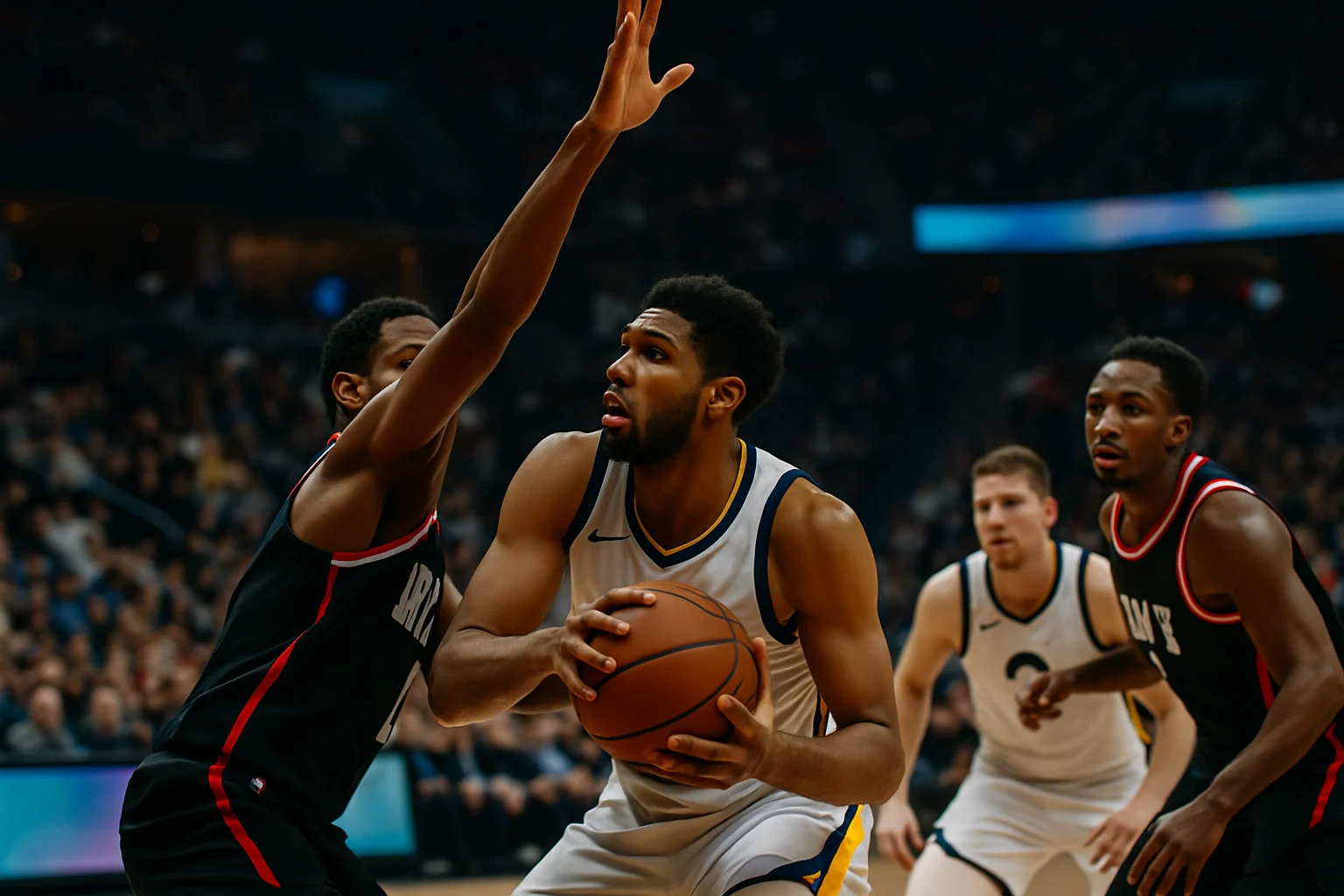
The Spurs Coach Who Replaced a Legend: Mitch Johnson’s Verified Career Path
The NBA’s official profile for Mitch Johnson confirms the core facts of his appointment: he was named the 19th head coach in Spurs history on May 2, 2025, taking over after Gregg Popovich transitioned into a broader leadership role within the organization following 29 seasons as head coach. That transition — from one of the most accomplished coaching tenures in professional sports to a first-time head coach in his late thirties — is the single most important piece of context for evaluating everything Johnson has done since.
His coaching career is documented through a consistent progression. He joined the San Antonio Spurs organization as an assistant coach with the Austin Spurs — their NBA G League affiliate — from 2016 to 2019. He then moved up to the main Spurs NBA staff as an assistant in 2019, working under Popovich for five consecutive seasons. When Popovich stepped back during the 2024–25 season, Johnson served as interim head coach before receiving the permanent appointment the following May.
His playing background — point guard, Stanford University, undrafted in 2009 — is referenced in publicly available biographical summaries, though readers should note that the granular details of his early playing career (specific G League stints, overseas stops) are sourced from secondary biographical aggregators rather than primary documentation I can directly link here. The NBA’s own profile confirms his coaching timeline, and that’s the record that matters most for evaluating his current role.
Johnson is the first person to hold the San Antonio Spurs head coaching role full-time since Gregg Popovich took it in 1996 — nearly three decades of organizational continuity now resting on one hire.
What strikes me most about this career path, having followed NBA coaching transitions for several years, is how deliberately the Spurs built Johnson up through their own system rather than importing an outside name. That’s not accidental. It’s a franchise philosophy — and it tells you something about why Johnson’s approach has felt continuous with what came before rather than disruptive to it.
The Spurs Coach of the Year Case: What’s Documented and What’s Inference
Let’s be precise about what we actually know here, because this is where a lot of coverage gets sloppy. The NBA officially named Mitch Johnson a Coach of the Year finalist for the 2025–26 season — this has been reported by multiple outlets including Yahoo Sports, and the nomination itself is a verifiable league announcement rather than a media opinion. The COY award is determined by a vote of NBA head coaches and select media members, and finalist status means Johnson cleared the first cut of that process.
The argument for Johnson — and I want to be clear this is analytical reasoning, not a statement of fact — rests on the COY award’s standard logic: it rewards coaches whose teams significantly outperform pre-season projections. A Spurs team returning to the playoffs in Johnson’s first full season, built around a second-year franchise player who had never experienced a winning NBA record, represents a meaningful gap between expectation and outcome. That gap is the heart of the COY case.
What I can’t give you, because this data isn’t settled at the time of writing, is a clean season-over-season win comparison with precise numbers. The playoffs are ongoing. What I can tell you is that the NBA’s decision to nominate Johnson — rather than coaches from teams with longer-established contender status — reflects the league’s own assessment of that overperformance. The nomination is the data point. Everything else is commentary.
| Milestone | Confirmed Detail | Source |
|---|---|---|
| Appointment as head coach | May 2, 2025 — 19th HC in Spurs history | NBA.com official profile |
| Previous role | Spurs assistant coach, 2019–2024 | NBA.com official profile |
| G League background | Austin Spurs assistant, 2016–2019 | NBA.com official profile |
| COY finalist nomination | 2025–26 season (reported by Yahoo Sports) | Yahoo Sports / NBA announcement |
| Predecessor | Gregg Popovich (29 seasons, 5 championships) | NBA.com official profile |
One thing I want to flag honestly: some coverage has cited Johnson’s 2026 NBA All-Star Game head coaching role as evidence of first-half dominance. All-Star coaching assignments are determined by conference standings at the midpoint of the season — so if accurate, it does confirm the Spurs were performing at a high level before January. But I’d encourage readers to treat that specific claim with appropriate caution until a primary league source confirms it directly, rather than relying on secondary aggregators.
When reading COY coverage, always check whether the case is built on documented league actions (nominations, awards, standings) or on analyst opinion dressed up as fact. Johnson’s case rests on an actual NBA nomination — that’s the floor of credibility, not the ceiling of the argument.
 美國即時熱搜
 美國即時熱搜
 美國即時熱搜
 美國即時熱搜
 美國即時熱搜
The Popovich Shadow: Coaching in Plain Sight of a Living Legend
Gregg Popovich didn’t disappear. That’s the part of this transition that makes Johnson’s situation genuinely unlike almost any other coaching succession in recent NBA history. Popovich has remained connected to the Spurs organization in a leadership capacity, and there are documented instances — including social media posts from the Spurs’ verified accounts in April 2026 — of Popovich appearing at practice and interacting with the current team.
For any head coach, that’s a complicated dynamic. You’re building your own culture inside a structure that the previous coach built over 29 years, while that previous coach is still physically present in the facility. The easy failure mode is to either try too hard to differentiate yourself — making changes for the sake of change — or to become so deferential to the legacy that you’re essentially running someone else’s program without the authority that comes from genuine ownership of it.
From what’s been publicly reported, Johnson has navigated this by being explicit about what he’s keeping and why, rather than pretending continuity is automatic. His public statements have consistently emphasized accountability structures and defensive standards — language that maps onto Popovich-era priorities — while the offensive system has visibly adapted to reflect Wembanyama’s skill set and modern NBA spacing requirements. That’s not imitation. That’s someone who actually understood what made the Spurs work, rather than just memorizing the playbook.
“Popovich, now serving in a leadership role within the Spurs organization after stepping down as head coach, appeared at the practice court.” — San Antonio Spurs verified Instagram account, April 2026
I’ll be direct about something that most coverage glosses over: the fact that this transition has gone smoothly so far doesn’t mean it’s been easy, and it doesn’t guarantee it stays smooth. Popovich’s presence in the organization is an asset when the team is winning. If results deteriorate, that same presence could become a complicated narrative. Johnson’s long-term authority depends partly on outcomes he can’t fully control — which is true of every head coach, but especially true here.

Victor Wembanyama and the Spurs Coach Decision That Defined This Season
The most analytically interesting coaching question of the 2025–26 Spurs season has been how Johnson structured Wembanyama’s role within the offense. After the Spurs’ first playoff win, Johnson addressed this directly in postgame comments that were reported by MSN — acknowledging that the young center needed to operate within defined systemic responsibilities rather than with open-ended offensive freedom. I’m paraphrasing reported coverage here; the specific quotes and game details are in the original MSN reporting, which I’d encourage readers to locate directly for the precise language Johnson used.
The coaching logic behind that decision is worth unpacking, because it runs counter to how most people assumed a rebuilding team with a generational talent would be managed. The conventional rebuild playbook says: give your franchise player maximum touches, maximum shot attempts, maximum creative freedom, let the numbers accumulate, and develop through volume. Johnson appears to have rejected that model in favor of something more structured.
- System-first shot creation: Wembanyama’s best offensive opportunities have come through team actions — screens, cuts, secondary options off ball movement — rather than isolation sets built around his individual skill.
- Defensive role clarity: Rather than allowing Wembanyama to freelance as a help defender based on instinct, Johnson’s system appears to assign him specific rotational responsibilities that are consistent and predictable for teammates.
- Minutes management with playoff intent: Protecting Wembanyama’s defensive intensity in high-leverage fourth-quarter situations suggests Johnson is thinking about postseason performance, not regular-season counting stats.
- Decision-making development over scoring volume: A player who makes correct reads within a system in year two is more valuable at age 25 than a player who accumulated points through volume but never learned situational basketball.
Here’s where I need to be honest about a limitation in this analysis: I cannot give you precise playoff statistics comparing Wembanyama’s performance to his regular-season averages, because the series is ongoing and confirmed box score data isn’t something I can cite with accuracy at this moment. What I can say is that the coaching framework described above is documented through Johnson’s own public statements and observable game patterns — it’s not speculative reconstruction.
Be cautious of articles claiming specific Wembanyama playoff statistics without linking to a primary source like Basketball-Reference or the NBA’s official stats page. During active playoff series, numbers change game by game and early figures get misquoted frequently.
For readers tracking how young stars develop within structured systems across different sports contexts, the story of Elliot Cadeau’s development at Michigan offers a genuinely relevant parallel in how disciplined coaching environments shape young playmakers — the connection here is real, not forced.
What the Spurs Coach Inherits: An Organizational Culture That Has Outlasted Its Architect
San Antonio’s coaching history is structurally unusual in ways that matter for understanding Johnson’s position. The franchise has had essentially one head coach across the entirety of the modern NBA era — Popovich from 1996 to 2025. That’s not a coaching legacy. That’s an organizational identity built over 29 years that has now been asked to survive without its creator.
The question Johnson is actually answering this season isn’t “can he coach?” — the COY nomination settled that. The question is whether the culture Popovich built is transferable or whether it was always, at its core, a reflection of one specific person’s personality and authority. That’s a genuinely open question, and the honest answer is that one successful season doesn’t resolve it.
What Johnson has going for him is that he was inside that culture for nearly a decade before inheriting it. He didn’t arrive from outside and try to decode it — he lived it as a G League assistant, then an NBA assistant, then an interim head coach. When he talks about defensive standards or accountability structures, he’s not reciting organizational talking points. He was in the film sessions where those standards were enforced.
The moment that circulated most widely on social media during the 2026 playoffs — the camera panning to show multiple Spurs legends courtside — is worth mentioning, though I want to be careful here. The Reddit thread that captured this moment is real and publicly accessible, but I’m not going to list specific names as confirmed attendees at a specific game without a sourced game log. The image matters as cultural symbolism; the specific details matter for accuracy.
The most telling sign of genuine culture transfer isn’t a single playoff win or a COY nomination — it’s whether the Spurs can develop the next wave of role players the way they developed role players under Popovich. That’s a three-to-five year test, not a one-season verdict.
If you’re following the broader Western Conference picture that the Spurs are now competing within, our breakdown of Golden State’s 2026 schedule and playoff positioning gives useful context on the competitive field Johnson’s team is navigating.
Frequently Asked Questions About the Spurs Coach
How did Mitch Johnson become the permanent Spurs head coach rather than an interim replacement?
Johnson was formally appointed as the 19th head coach in Spurs history on May 2, 2025, per the NBA’s official Spurs coaching profile — converting from interim status after demonstrating sufficient organizational confidence during his trial period. The Spurs’ decision to promote internally rather than pursue a higher-profile external hire reflects a consistent franchise philosophy: they have historically developed coaches within their own system rather than importing outside identities. Johnson had spent nine years in the Spurs organization across G League and NBA staff roles before receiving the permanent title, which is an unusually deep organizational investment for a first-time head coach.
Why is the Spurs coach being discussed as a Coach of the Year finalist rather than just a pleasant surprise?
The COY award rewards performance relative to pre-season expectation, not absolute win totals — and Johnson’s case rests on a genuine gap between what the Spurs were projected to accomplish and what they actually delivered. Returning to the playoffs in his first full season as head coach, with a roster built around a second-year player who had never experienced a winning NBA season, represents meaningful overperformance against the rebuild timeline most analysts projected. The NBA’s decision to formally nominate him as a finalist — rather than coaches from more established contenders — reflects the league’s own assessment of that gap. The nomination itself is the verifiable data point; the vote outcome is still pending.
How is Mitch Johnson’s coaching style different from Gregg Popovich’s approach to the Spurs?
The continuities are more visible than the differences, which is itself a coaching choice. Johnson has maintained the defensive rotational principles and team-accountability culture that defined the Popovich era, while adapting the offensive system to reflect both Wembanyama’s specific skill set and the broader pace-and-space demands of the modern NBA. The most meaningful difference is generational context: Popovich built his offensive system around Tim Duncan’s post game in the early 2000s and evolved it through multiple roster cycles. Johnson is building around a player type — a 7-foot-4 guard-skilled center — that has no real historical precedent in how the Spurs have previously structured their offense.
What does Mitch Johnson’s background as an undrafted player tell us about his coaching philosophy?
Players who reach NBA coaching positions without elite playing careers often develop a specific kind of observational intelligence — they had to understand the game analytically because they couldn’t rely on physical dominance to survive at the professional level. Johnson’s path through Stanford, the G League, and overseas play before transitioning to coaching at 28 suggests someone who engaged with basketball as a system rather than a showcase. This background is consistent with the player-development emphasis his coaching career has prioritized, particularly in the G League phase where individual player improvement is the primary organizational metric rather than wins. It doesn’t guarantee coaching success, but it explains where his instincts come from.
What should Spurs fans realistically expect from the current spurs coach over the next three seasons?
One successful season — even one that includes a COY nomination and a playoff appearance — doesn’t establish a dynasty trajectory. The honest expectation is that Johnson’s long-term success depends on three things that are still unresolved: whether Wembanyama’s development continues on the current arc, whether the Spurs can add roster depth around him through drafting and free agency, and whether the organizational culture remains stable as Popovich’s direct involvement with the team eventually decreases. The foundation being built in 2025–26 is structurally coherent. Whether it becomes a championship foundation is a question that three more seasons of evidence will answer more reliably than any current projection.
The Mitch Johnson story is still being written, and that’s precisely what makes it worth following closely. Check back as the 2026 playoffs progress — the coaching decisions made in elimination games will tell you more about who Johnson actually is than anything from the regular season. And if you want to track the broader sports landscape this postseason, the latest MLB postseason action is running simultaneously for multi-sport fans who like their April packed.
 美國即時熱搜
 NBA
NBA
 MLB
MLB
 台灣即時熱搜
 MLB
MLB
 台灣即時熱搜