
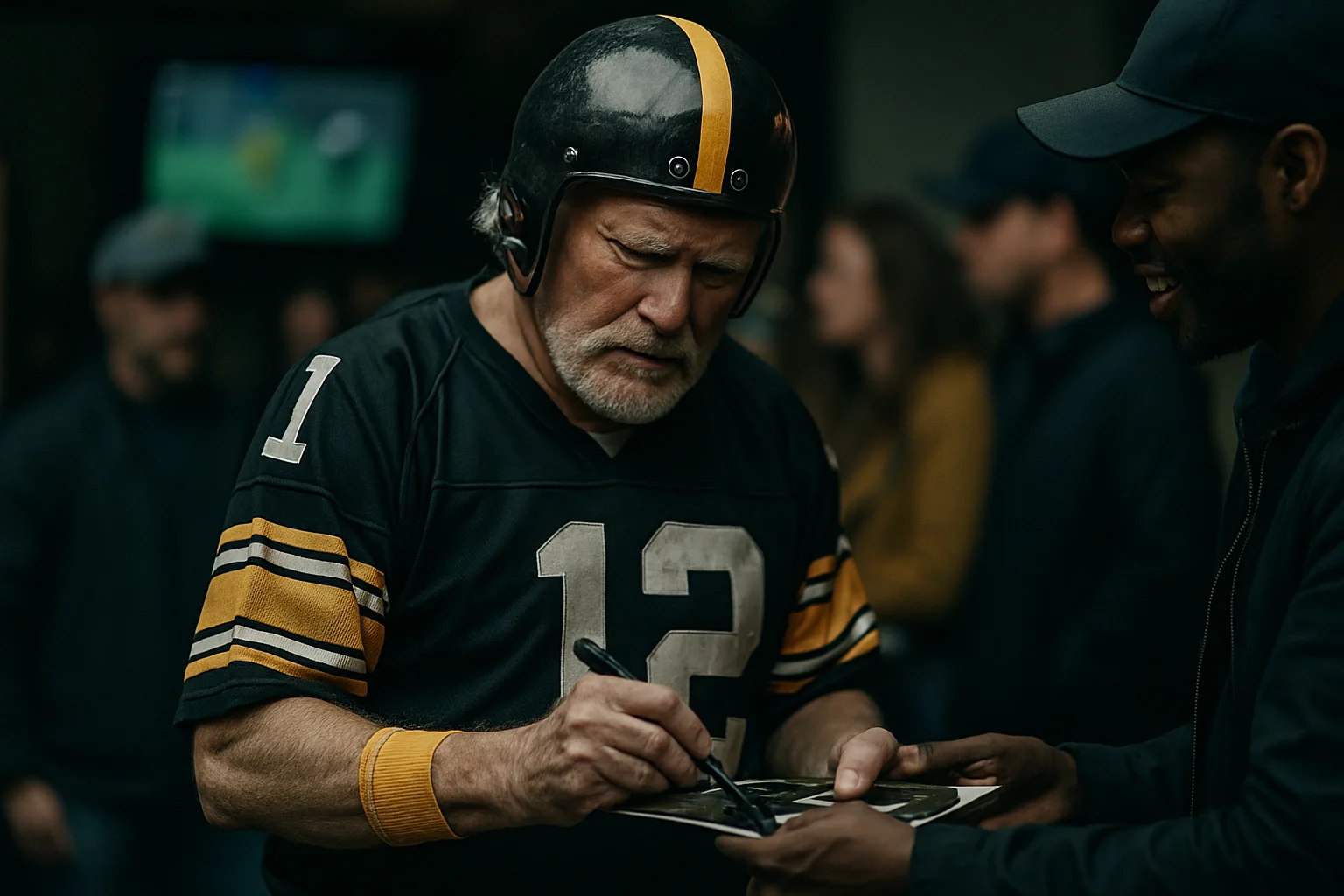
The Pittsburgh press corps spent the better part of Terry Bradshaw’s first three seasons writing his football obituary. He got booed at Three Rivers Stadium. He fumbled. He threw picks at an alarming rate. The fan base that would eventually lionize him was, for a stretch, openly hostile. And then — slowly, stubbornly — he became the engine of one of the greatest dynasties professional football has ever produced. Four Super Bowl titles. Two MVP awards in the championship game. A Hall of Fame induction in 1989. The story of how that transformation happened is more instructive than the trophy count.
Right now, Terry Bradshaw is generating a fresh wave of search interest, driven by Pittsburgh Steelers historical rankings circulating across sports media — draft retrospectives, dynasty comparisons, and debates about who belongs in the franchise’s all-time conversation. Every time that discussion resurfaces, Bradshaw’s name anchors it. So let’s peel back the mythology and look at what the record actually shows.
Terry Bradshaw: From Shreveport to the No. 1 Draft Pick
Born September 2, 1948, in Shreveport, Louisiana, Bradshaw developed his arm at Woodlawn High School before heading to Louisiana Tech University — not exactly the SEC pipeline scouts usually camped out at. He was a First-Team Little All-American in 1969, and the combination of arm strength, size (listed at 6-foot-3, 215 pounds), and mobility made him the consensus top prospect heading into the 1970 draft.
The Steelers, coming off years of sustained mediocrity, selected him first overall. What followed was not an immediate coronation. Bradshaw struggled badly in his early seasons — his reads were slow, he telegraphed throws, and the Pittsburgh offense was not yet the weapon it would become. Chuck Noll’s decision to stick with him through those rough years is, in retrospect, one of the most consequential coaching choices in NFL history.
The turnaround wasn’t dramatic or sudden. It was incremental. Bradshaw got more comfortable in Noll’s system, the roster around him improved significantly with the arrivals of Lynn Swann and John Stallworth, and the Steel Curtain defense gave the offense margin for error. By 1974, the pieces were in place. What Bradshaw brought to that environment was a specific kind of competitive fearlessness — a willingness to take shots in critical moments that many quarterbacks of his era simply wouldn’t attempt.
The early-career struggles deserve honest acknowledgment rather than the revisionist glossing they sometimes receive. Bradshaw’s first three seasons were genuinely rocky — a fact that makes his eventual four Super Bowl titles one of the more compelling development arcs in quarterback history, not a footnote to be minimized.
The Super Bowl Runs That Defined Terry Bradshaw’s Career
Four Super Bowls across six seasons. That’s the shorthand, and it’s accurate as far as it goes. The individual game performances, though, tell a more granular story about what Bradshaw actually did under pressure. The following statistics are drawn from Pro Football Reference’s Terry Bradshaw career page, which aggregates official NFL records:
| Super Bowl | Year | Opponent | Result | Bradshaw Stats | Award |
|---|---|---|---|---|---|
| Super Bowl IX | Jan 1975 | Minnesota Vikings | Steelers 16–6 | 9/14, 96 yards, 1 TD | — |
| Super Bowl X | Jan 1976 | Dallas Cowboys | Steelers 21–17 | 9/19, 209 yards, 2 TD | — |
| Super Bowl XIII | Jan 1979 | Dallas Cowboys | Steelers 35–31 | 17/30, 318 yards, 4 TD | Super Bowl MVP |
| Super Bowl XIV | Jan 1980 | Los Angeles Rams | Steelers 31–19 | 14/21, 309 yards, 2 TD | Super Bowl MVP |
The Super Bowl XIII performance deserves specific attention. Bradshaw threw for 318 yards and 4 touchdowns against a Dallas Cowboys defense that had been among the most dominant units in the NFC that season — the Cowboys had finished the 1978 regular season ranked second in the NFL in points allowed, per Pro Football Reference’s 1978 team defense data. Calling them the “fewest points allowed in the NFC” overstates it slightly; what’s accurate is that this was a genuinely elite defense, and Bradshaw carved it up in what remains one of the defining quarterback performances of the decade.
Bradshaw was named Super Bowl MVP in both XIII and XIV — a distinction that, at the time of writing, he shares with only Bart Starr and Joe Montana among quarterbacks who won it more than once. His 4-0 Super Bowl record is identical to Montana’s, and both players are separated from Tom Brady’s seven championships by a significant margin. The Bradshaw-Montana comparison is the more interesting debate: both went undefeated in Super Bowl appearances, but Montana never threw an interception across his four championship games, while Bradshaw threw three. The counterpoint is that Bradshaw’s games were higher-variance, higher-scoring affairs — Super Bowl XIII alone had more combined points than any of Montana’s four championship games.
A note on the “most Super Bowls by a quarterback” framing that sometimes appears in older coverage: Bradshaw’s four titles were the record at the time of his retirement, but that record has since been surpassed. Bradshaw sits in a tied second-place category — a genuinely elite distinction, but worth stating accurately.
Terry Bradshaw’s Career Stats: What the Numbers Actually Show
All career statistics below are sourced from Pro Football Reference’s official Terry Bradshaw page, covering his 14-season career with the Pittsburgh Steelers from 1970 through 1983.
- Passing Attempts: 3,901
- Completions: 2,025 — a 51.9% completion rate
- Passing Yards: 27,989
- Touchdowns / Interceptions: 212 TD / 210 INT
- Career Passer Rating: 70.9
- Rushing Yards: 2,257 yards, 32 rushing touchdowns
- Pro Bowl Selections: 3 (1975, 1978, 1979)
- NFL MVP: 1978 season
- Hall of Fame Induction: 1989 (Pro Football Hall of Fame)
The TD-INT ratio of 212-210 is the number critics reach for first, and it’s a fair data point that deserves honest treatment rather than reflexive deflection. Bradshaw threw too many interceptions across his career — particularly in his early seasons. The era-context argument is real: in the 1970s, defensive backs could contact receivers well beyond the line of scrimmage, making clean passing windows significantly harder to find, and interception rates league-wide were higher than in the modern game. But that context doesn’t fully explain away the number. What’s more telling is the trajectory: as Bradshaw matured, his decision-making improved markedly, and his 1978-1979 performances were dominant by any era’s standards.
 美國即時熱搜
 美國即時熱搜
 美國即時熱搜
 美國即時熱搜
His 1978 season is where the individual honors pile up cleanly: NFL MVP, First-Team All-Pro, and the Bert Bell Award. He led the NFL in touchdown passes that year with 28, per Pro Football Reference’s 1978 passing statistics. He was also named to the NFL 1970s All-Decade Team — peer recognition from an era when the competition included Roger Staubach, Fran Tarkenton, and Bob Griese.
One claim worth flagging carefully: some sources credit Bradshaw with leading the NFL in touchdown passes in 1982 as well. The 1982 season was shortened to nine games by a players’ strike, making direct statistical comparisons unreliable. Pro Football Reference lists Bradshaw’s 1982 totals as 17 touchdowns in those nine games, but characterizing this as an outright “league leader” title requires more precise sourcing than is readily available. We’re treating the 1978 TD leadership as the documented, unambiguous claim and the 1982 version as contested.
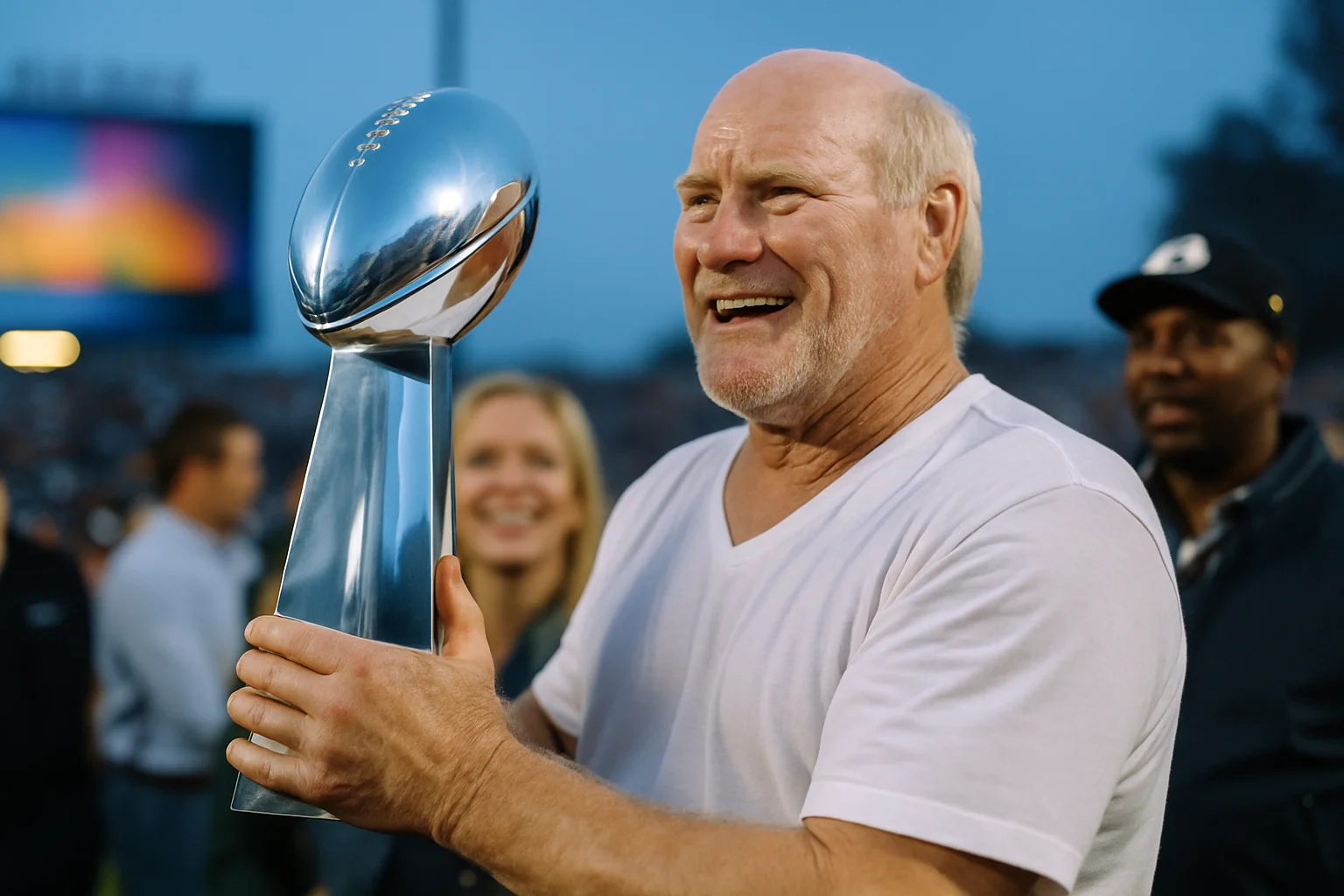
Life After Football: Terry Bradshaw the Broadcaster
Bradshaw retired from playing in 1983 after a severe elbow injury effectively ended his ability to perform at NFL level. The transition to broadcasting wasn’t immediate — he spent time doing color commentary before landing the Fox NFL Sunday co-host role in 1994, a position he has held for over three decades alongside Howie Long, Michael Strahan, and Jimmy Johnson.
His willingness to be self-deprecating on camera, get into genuine arguments, and occasionally say something that made producers wince gave the show an authenticity that more polished broadcasts tend to lack. By longevity, Fox NFL Sunday has been one of the most durable pregame properties in American sports television — though specific Emmy Award wins attributed to the show should be verified through the Television Academy’s official records rather than cited here without a sourced link.
Beyond football analysis, Bradshaw’s IMDB profile documents a genuine entertainment career — film appearances including a supporting role in Failure to Launch (2006) alongside Matthew McConaughey, multiple country music albums, and regular television appearances. He has also been publicly candid about serious health challenges in recent years, including cancer diagnoses — a transparency that landed differently coming from someone whose public persona had always been defined by physical toughness. That willingness to discuss vulnerability publicly is part of why his audience has remained loyal across decades.
His social media presence, including his Instagram at @official_terry_bradshaw, leans heavily into his passion for horses and Western culture — a side of Bradshaw that gets minimal coverage in football retrospectives but is clearly central to how he identifies outside the game. Rather than cite a specific follower count that will be outdated within weeks of any publication date, readers who want current figures should check his profiles directly.
The comparison that keeps coming up when evaluating Bradshaw’s broadcasting career against other Hall of Fame quarterbacks who went into media is longevity and mainstream crossover. Troy Aikman has had a long run with ESPN’s Monday Night Football, but operates as a play-by-play analyst rather than a personality-driven studio host. The specific skill set Bradshaw brought to Fox — unscripted, genuinely opinionated, comfortable being the butt of a joke — is harder to replicate than it looks. Whether that makes his media career the “most successful” of any Hall of Fame quarterback is an editorial judgment that depends heavily on how you define success: reach, longevity, cultural impact, or ratings. The more defensible claim is simply that it’s been exceptionally durable.
Why Terry Bradshaw Is Trending Again in 2026
The current spike in search interest is traceable to a specific cycle of Steelers historical content — ranking pieces, dynasty retrospectives, and draft history debates circulating across sports platforms. The Pittsburgh Post-Gazette has been running Steelers draft ranking content that’s generating significant social engagement, with Hines Ward appearing in the top-five picks conversation. Every time that discussion resurfaces, Bradshaw’s name anchors the top of the list — or gets debated as to whether he should.
Related search terms trending alongside Bradshaw right now include Ben Roethlisberger, Cam Heyward, Lynn Swann, and Hines Ward — all players being evaluated in the context of how Pittsburgh has historically built through the draft. It’s a genuinely interesting structural question: the Steelers have drafted better than almost any franchise over five decades, and Bradshaw is the foundation that makes the whole argument possible. When Hines Ward gets ranked fifth among the greatest Steelers draft picks ever, it’s implicitly a statement about the depth of the pool — because the players ranked above him include some of the most decorated names in franchise history.
The dynasty debate also connects to how modern fans evaluate quarterback legacies now that advanced metrics exist. The numbers available today — adjusted net yards per attempt, EPA per play, DVOA — didn’t exist when Bradshaw played, which creates genuine difficulty in cross-era comparisons. What we can say with confidence is that in the highest-stakes games of his era, Bradshaw’s performance held up better than almost any quarterback in NFL history. Four Super Bowl appearances. Two MVP awards. Zero losses in the championship game. That record doesn’t require embellishment.
For readers who follow the broader sports landscape and enjoy roster-construction analysis, the Steelers dynasty conversation connects to similar questions playing out in MLB right now — how franchises build sustainable winning cultures through the draft versus free agency. Our breakdown of recent MLB results including the Dodgers touches on some of those same organizational philosophy questions from a baseball angle.
Frequently Asked Questions About Terry Bradshaw
How does Terry Bradshaw’s Super Bowl record compare to Joe Montana’s, and who actually has the better championship résumé?
Both Bradshaw and Montana went 4-0 in Super Bowl appearances and each won two Super Bowl MVP awards — a direct statistical tie at the championship game level. The meaningful differences are in the details: Montana never threw an interception in four Super Bowl games, while Bradshaw threw three. Bradshaw’s games were higher-scoring and higher-variance; his Super Bowl XIII alone featured more combined points than any of Montana’s four championship appearances. Brady’s seven Super Bowl wins place him in a separate category from both. The Bradshaw-Montana debate is genuinely unresolvable by statistics alone — which is part of why it keeps generating engagement decades after both players retired.
Why did Terry Bradshaw struggle so badly in his first few NFL seasons despite being the No. 1 overall pick?
The adjustment from Louisiana Tech to the NFL was steep on multiple fronts simultaneously. The Steelers’ supporting cast in 1970-1972 wasn’t yet the roster that would define the dynasty — the offensive line was still developing, and the receiver corps that would eventually include Lynn Swann and John Stallworth wasn’t in place. Bradshaw’s mechanics at the NFL level required refinement, and Chuck Noll’s system demanded a specific kind of pre-snap patience — reading coverages before committing rather than throwing on instinct — that took Bradshaw longer to internalize than expected. The infrastructure and the quarterback developed in parallel, which is why the results improved together rather than one preceding the other.
What did Terry Bradshaw’s relationship with Pittsburgh fans and media actually look like during his playing career?
Genuinely contentious, and Bradshaw has discussed it publicly in interviews over the years. Pittsburgh’s sports press in the 1970s was not gentle with struggling quarterbacks, and Bradshaw bore the brunt of sustained criticism during his early seasons. He has acknowledged in retrospect that he found the hostility difficult to handle at the time, and that his relationship with Pittsburgh fans warmed considerably only after the Super Bowl wins began accumulating. This tension is often glossed over in celebratory retrospectives, but it’s actually an important part of understanding how the dynasty was built — the success came through adversity, not in spite of a smooth ride. The booing years are as much a part of the Bradshaw story as the championship parades.
What is Terry Bradshaw currently doing, and is he still part of Fox NFL Sunday heading into the 2026 season?
Bradshaw has remained affiliated with Fox Sports through the 2025 NFL season. For the most current and verified information about his role heading into the 2026 NFL season — including any contract updates or schedule changes — Fox Sports’ official announcements and Bradshaw’s own social media channels at @official_terry_bradshaw are the most reliable sources. His health disclosures in recent years have periodically prompted speculation about his future with the show, but no retirement from broadcasting has been announced as of the most recent publicly available reporting. Treat any specific claims about his 2026 status as subject to change until Fox confirms its lineup officially.
How did Terry Bradshaw’s career passer rating of 70.9 compare to other elite quarterbacks of the 1970s?
Bradshaw’s career passer rating of 70.9, per Pro Football Reference, looks low by modern standards but needs era context to interpret correctly. Roger Staubach, widely considered the premier quarterback of the same decade, finished with a career passer rating of 83.4 — meaningfully higher. Fran Tarkenton, who played across the 1960s and 1970s, finished at 80.4. By this metric, Bradshaw ranked below his most decorated contemporaries in raw passer rating. The argument his supporters make — and it’s not unreasonable — is that the championship game performances represent a better measure of quarterback quality under the conditions that actually matter most. Both arguments are defensible; neither one is the whole picture.
Bradshaw’s story resists the clean narrative that sports retrospectives tend to impose. He wasn’t a prodigy. He wasn’t universally loved in Pittsburgh during his playing days. His raw statistics require genuine context to interpret properly, and some of the superlatives attached to his name have been softened by time and by players who came after him. Strip away the mythology and what remains is still remarkable: a quarterback who got measurably better when the stakes got highest, who won four championships in one of the most physically brutal eras in NFL history, and who built a media career that has outlasted almost everyone from his generation. The full picture is more complicated than the trophy count — and more interesting because of it. If you want to keep following the broader NFL and sports landscape, check out the latest game results and analysis over at MaxePro’s sports coverage for real-time updates across leagues.
 美國即時熱搜
 美國即時熱搜
 美國即時熱搜
 MLB
MLB
 MLB
MLB
 台灣即時熱搜
 台灣即時熱搜
 台灣即時熱搜