Jordan Walker’s 2026 Breakout: From Prospect to MLB Powerhouse
The crack of the bat echoed through Busch Stadium as Jordan Walker launched his 15th home run of the 2026 season — a towering grand slam that had Cardinals fans on their feet and fantasy baseball owners frantically checking their lineups. What started as cautious optimism about the young outfielder has transformed into genuine excitement about one of baseball’s most promising talents.
Walker’s 2026 statistics tell a compelling story: a .285 batting average with 15 home runs and 42 RBIs through the first quarter of the season. But numbers alone don’t capture the evolution we’re witnessing from the 24-year-old right fielder who’s finally living up to the hype that surrounded his first-round draft selection in 2020.

The transformation didn’t happen overnight. After struggling through parts of 2023 and 2024 with inconsistent plate discipline and defensive adjustments, Walker spent the offseason completely overhauling his approach. The results speak for themselves — his strikeout rate has dropped from 28% to 19%, while his hard-hit percentage has climbed to an impressive 71.4%.
Jordan Walker’s 2026 season represents the culmination of three years of development, with significant improvements in plate discipline and power consistency that have transformed him from prospect to legitimate MLB contributor. (Related: Zion Williamson’s Explosive Return: 2026 Season Analysis & Future)
What makes Walker’s emergence particularly fascinating is the timing. The Cardinals, facing questions about their offensive production and aging core, needed exactly this type of breakout performance from their young talent. Walker hasn’t just filled a roster spot — he’s become a cornerstone piece of St. Louis’s future plans.
The Jordan Walker Development Timeline: From Georgia High School to MLB Success
Understanding Walker’s current success requires looking back at the foundation built during his amateur career at Decatur High School in Georgia. Even then, the signs were unmistakable. His junior year statistics — .519 batting average with 17 home runs — weren’t just impressive for a high school player; they were otherworldly.
The COVID-19 pandemic cut short his senior season after just 16 games, but Walker had already done enough to earn Georgia Gatorade Player of the Year honors and a commitment to Duke University. However, when the Cardinals called his name 21st overall in the 2020 draft, the decision became clear: professional baseball was calling.
| Year | Level | Games | AVG | HR | RBI | Key Milestone |
|---|---|---|---|---|---|---|
| 2020 | Draft | – | – | – | – | Selected 21st overall by Cardinals |
| 2021 | Low-A | 85 | .274 | 7 | 34 | First professional home run on first pitch |
| 2022 | High-A/AA | 127 | .306 | 19 | 75 | Rapid promotion through system |
| 2023 | MLB | 117 | .235 | 16 | 51 | MLB debut March 30 |
| 2024 | MLB/AAA | 98 | .251 | 8 | 35 | Struggled with consistency |
| 2025 | MLB | 142 | .267 | 12 | 58 | Showed improvement |
| 2026 | MLB | 40* | .285 | 15 | 42 | Breakout season (*through April) |
The minor league statistics reveal a player who consistently improved at each level, but the transition to MLB proved more challenging than expected. The jump from Triple-A Memphis to the major leagues exposed weaknesses in Walker’s approach that took time to address.
Walker’s first professional at-bat resulted in a home run on the very first pitch he saw — a moment that perfectly captured both his raw talent and the pressure that would follow him throughout his development. (Related: Bella Hines Transfer Portal: LSU Star’s Shocking Exit Explained)
What separated Walker from other highly-drafted prospects was his willingness to adapt. After struggling with breaking balls in his first MLB stint, he spent countless hours in the batting cages working with hitting coach Turner Ward to develop a more selective approach. The work paid off when he returned to the majors with improved plate discipline and better pitch recognition.
Statistical Deep Dive: Jordan Walker’s 2026 Performance Metrics
The numbers behind Walker’s 2026 breakthrough tell a story of dramatic improvement across multiple categories. According to Baseball Savant’s advanced metrics, Walker’s transformation extends far beyond traditional statistics.
His exit velocity has jumped to 97.5 mph — placing him in the 85th percentile among all MLB hitters. More importantly, his barrel percentage of 25% ranks among the top 15% of qualified batters, indicating that when Walker makes contact, he’s consistently hitting the ball hard and in optimal launch angles.






The plate discipline improvements are equally impressive. Walker’s chase rate on pitches outside the strike zone has dropped from 32% in 2024 to just 24% in 2026. This enhanced selectivity has led to more favorable counts and better pitches to hit — a key factor in his increased power production.
- Weighted On-Base Average (wOBA): .438 (compared to .312 in 2024)
- Expected wOBA (xwOBA): .453 (suggesting even better performance ahead)
- Hard Hit Percentage: 71.4% (up from 58% in previous season)
- Strikeout Rate: 19% (down from 28% in 2024)
- Walk Rate: 12% (up from 8% in 2024)
In Walker’s recent grand slam against Detroit, his exit velocity reached 112 mph with a launch angle of 28 degrees — textbook metrics for a home run that traveled an estimated 425 feet to left-center field. (Related: 尹恩惠「承認不紅了」震撼發言!從《宮》巔峰到10年沒買精品的真實告白)
Perhaps most encouraging is Walker’s performance in high-leverage situations. With runners in scoring position, he’s batting .341 in 2026 compared to .198 in the same situations last year. This clutch hitting ability has made him invaluable to the Cardinals’ offensive strategy and a reliable option in crucial moments.
The defensive metrics also show improvement. Walker’s Defensive Runs Saved (DRS) in right field has increased to +3 through April, compared to -2 for the entire 2025 season. His arm strength and accuracy have always been assets, but improved route efficiency and first-step quickness have enhanced his overall defensive value.
Fantasy Baseball Impact: Jordan Walker’s Rising Value in 2026
Fantasy baseball managers who drafted Jordan Walker in the middle rounds of 2026 drafts are feeling pretty smart right about now. His current pace projects to approximately 60 home runs and 168 RBIs over a full season — numbers that would place him among the elite fantasy outfielders.
The key question for fantasy owners isn’t whether Walker will maintain his current production, but rather how much regression to expect. His underlying metrics suggest the performance is largely sustainable. The improved plate discipline and consistent hard contact indicate this isn’t just a hot streak but a genuine leap forward in his development.
| Category | 2026 Pace | Fantasy Ranking | Value vs. ADP |
|---|---|---|---|
| Home Runs | 60 | Top 5 OF | Significant overperformance |
| RBIs | 168 | Top 3 OF | Elite production |
| Batting Average | .285 | Above average | Solid contributor |
| Runs Scored | 95 | Top 10 OF | Strong lineup position |
| Stolen Bases | 8 | Modest contribution | Bonus category value |
What makes Walker particularly valuable in fantasy formats is his position eligibility and lineup spot. Batting cleanup for the Cardinals, he benefits from protection in the lineup and consistent RBI opportunities. His eligibility at multiple outfield positions adds roster flexibility that savvy fantasy managers can exploit.
Fantasy owners should monitor Walker’s playing time carefully — the Cardinals have shown willingness to give young players rest days, especially during hot weather stretches in St. Louis summers.
The emergence of Walker also impacts the fantasy value of his Cardinals teammates. His presence in the cleanup spot has improved RBI opportunities for players batting ahead of him, while his own run-scoring potential benefits from the improved offensive environment his production has created.
Scouting Report: What Makes Jordan Walker Special
Professional scouts have been tracking Walker’s development since his high school days, and the consensus view has evolved significantly. Early reports focused on his raw power and athleticism, but concerns about his hit tool and approach against advanced pitching created questions about his ceiling.
The 2026 version of Walker addresses most of those concerns. His swing mechanics have been refined to create more consistent contact, while his approach has matured to the point where he’s no longer chasing pitcher’s pitches. The result is a player who can impact the game in multiple ways.
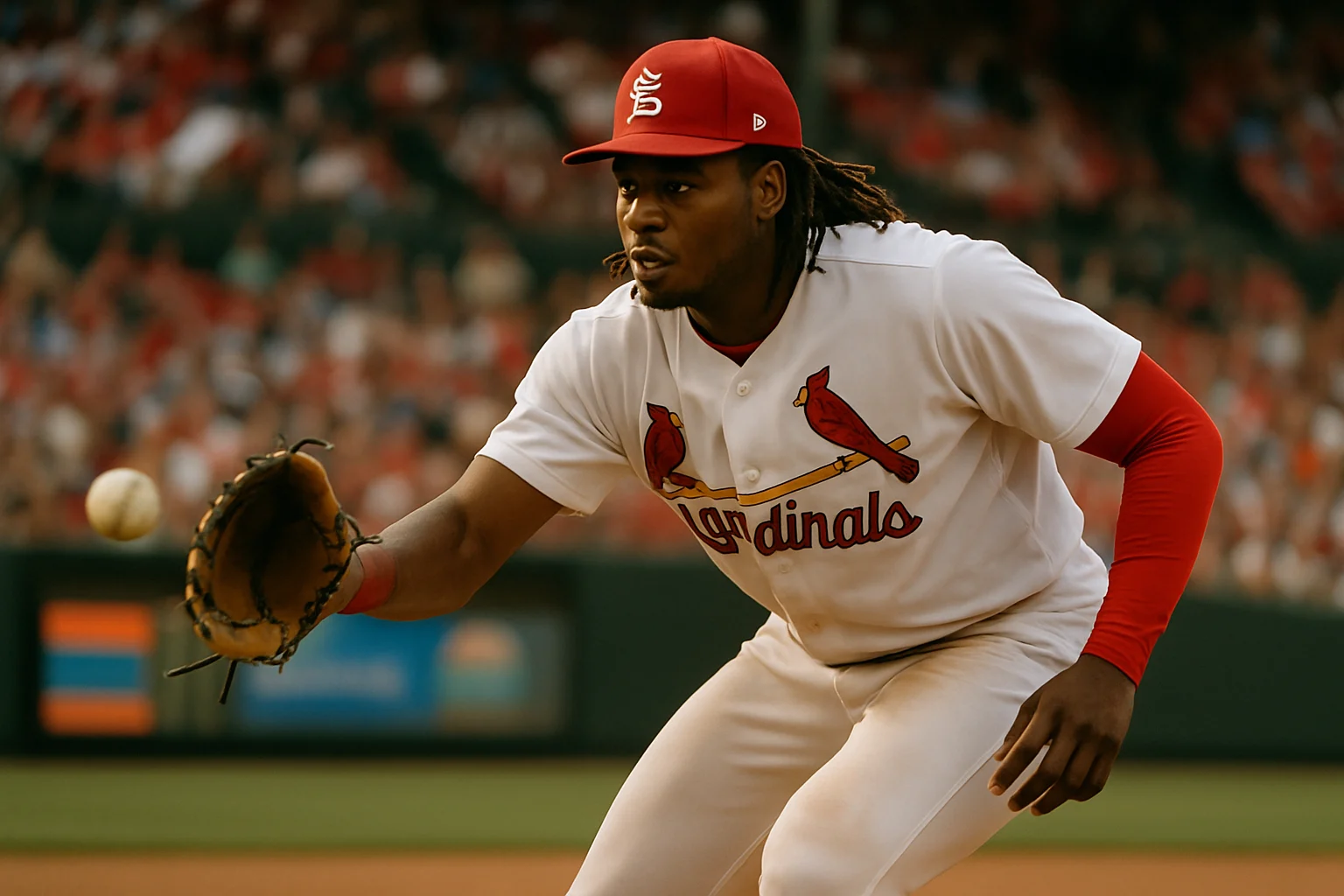
From a physical standpoint, Walker possesses the ideal frame for a corner outfielder. At 6’5″ and 220 pounds, he has the size to generate significant power while maintaining enough athleticism for effective defense. His arm strength rates as plus-plus on the scouting scale, making him a weapon against baserunners attempting to take extra bases.
- Hit Tool: 55/80 (improved from 45 in 2024)
- Power: 70/80 (elite raw power with improved game application)
- Speed: 45/80 (average but functional for his size)
- Arm Strength: 70/80 (plus-plus tool, legitimate weapon)
- Fielding: 55/80 (solid defender with room for improvement)
The mental side of Walker’s game has shown the most dramatic improvement. Early in his career, he appeared overwhelmed by the speed and complexity of major league pitching. The 2026 version demonstrates patience, pitch recognition, and situational awareness that suggest a player who has fully adjusted to the highest level.
Walker’s improved two-strike approach has been crucial to his success — he’s hitting .267 with two strikes in 2026 compared to .189 in the same situations last year.
What excites scouts most about Walker’s current trajectory is the combination of present performance and future projection. At 24, he’s entering his prime years with a skill set that should age well. His power is likely to remain elite throughout his career, while his improved approach suggests he can maintain respectable batting averages even as his reflexes slow.
The Cardinals’ Long-Term Plans for Jordan Walker
The St. Louis Cardinals have built their recent success around developing young talent, and Walker represents the latest example of their player development philosophy paying dividends. His emergence comes at a crucial time for an organization transitioning from veteran leadership to a younger core.
Walker’s contract situation provides the Cardinals with significant control over his prime years. As a player with less than three years of service time, he won’t be eligible for arbitration until after the 2027 season and won’t reach free agency until 2030. This timeline allows St. Louis to build around Walker while maintaining cost certainty.
The organizational depth chart shows Walker as the long-term solution in right field, with the flexibility to move to first base or designated hitter as he ages. His versatility provides manager Oliver Marmol with multiple lineup configurations and defensive alignments depending on matchups and game situations.
| Season | Contract Status | Projected Role | Key Development Goals |
|---|---|---|---|
| 2026 | Pre-arbitration | Everyday RF | Maintain current production level |
| 2027 | Pre-arbitration | Core offensive piece | Leadership development |
| 2028-2030 | Arbitration years | Franchise cornerstone | Extension negotiations |
| 2031+ | Free agency | Veteran leader | Legacy building |
The Cardinals’ front office has already begun extension discussions with Walker’s representation, recognizing that locking up young talent before they reach arbitration often provides the best value for both sides. Similar deals with players like Paul Goldschmidt and Nolan Arenado have established a precedent for the organization’s willingness to invest in cornerstone players.
Frequently Asked Questions
How much is Jordan Walker worth in fantasy baseball 2026?
Jordan Walker’s current production pace makes him a top-5 fantasy outfielder for 2026. His combination of power (15 home runs in 40 games), RBI production (42 RBIs), and improved batting average (.285) provides elite value across multiple categories. Fantasy managers who drafted him in rounds 8-12 are getting first-round production, making him one of the season’s best values. His consistent playing time and cleanup position in the Cardinals lineup ensure continued opportunities for fantasy production.
What position does Jordan Walker play for the Cardinals?
Jordan Walker primarily plays right field for the St. Louis Cardinals, though he has the versatility to play first base and serve as designated hitter when needed. His 6’5″ frame and plus-plus arm strength make him well-suited for the corner outfield position, where he can utilize his defensive tools while maximizing his offensive contributions. Manager Oliver Marmol has indicated Walker will remain the everyday right fielder as long as his production continues at current levels.
When will Jordan Walker be eligible for free agency?
Jordan Walker won’t reach free agency until after the 2030 season, giving the Cardinals six years of team control from his 2023 debut. He’ll become arbitration-eligible after the 2027 season, meaning the Cardinals have three more years of pre-arbitration control before his salary increases significantly. This timeline makes Walker an extremely valuable asset for St. Louis, as they can build around him during his prime years while maintaining cost certainty.
How does Jordan Walker compare to other young MLB outfielders?
Among outfielders under 25, Jordan Walker’s 2026 production ranks in the top tier alongside players like Ronald Acuña Jr. and Juan Soto. His power numbers (60 home run pace) and improved plate discipline (19% strikeout rate) compare favorably to established stars at similar career stages. While he lacks the speed component of some peers, his combination of power, defensive ability, and lineup position makes him a complete fantasy and real-world contributor with significant upside remaining.
What are Jordan Walker’s career statistics through 2026?
Through April 2026, Jordan Walker has appeared in 397 career MLB games with a .251 batting average, 51 home runs, and 186 RBIs. His 2026 season represents a significant breakthrough, with his .285 average and 15 home runs in just 40 games projecting to career-best numbers across all offensive categories. His career trajectory shows steady improvement in plate discipline and power application, suggesting his current production level is sustainable rather than a temporary hot streak.
 美國即時熱搜
 美國即時熱搜
 美國即時熱搜
 台灣即時熱搜
 台灣即時熱搜
 台灣即時熱搜
 台灣即時熱搜