
There's a specific kind of crowd pop that only a handful of wrestlers in history can reliably produce — the kind where you hear it before you even see the person walk out.
There’s a specific kind of crowd pop that only a handful of wrestlers in history can reliably produce — the kind where you hear it before you even see the person walk out. CM Punk is one of maybe five performers alive who still gets that reaction, and heading into WrestleMania 42, he’s doing it all over again.
As of mid-April 2026, CM Punk is sitting at over 5,000 weekly Google searches — trending alongside names like Becky Lynch and AJ Lee, which tells you something about the WrestleMania cultural moment WWE has built. The latest SmackDown go-home show featured Cody Rhodes and CM Punk sharing the stage for a final pre-WrestleMania statement, and the internet did what the internet does when those two are in the same frame: it exploded.
But this isn’t just a hype piece about a wrestling show. The more interesting question is why CM Punk keeps landing at the center of the conversation, year after year, return after return. That answer is worth actually unpacking.
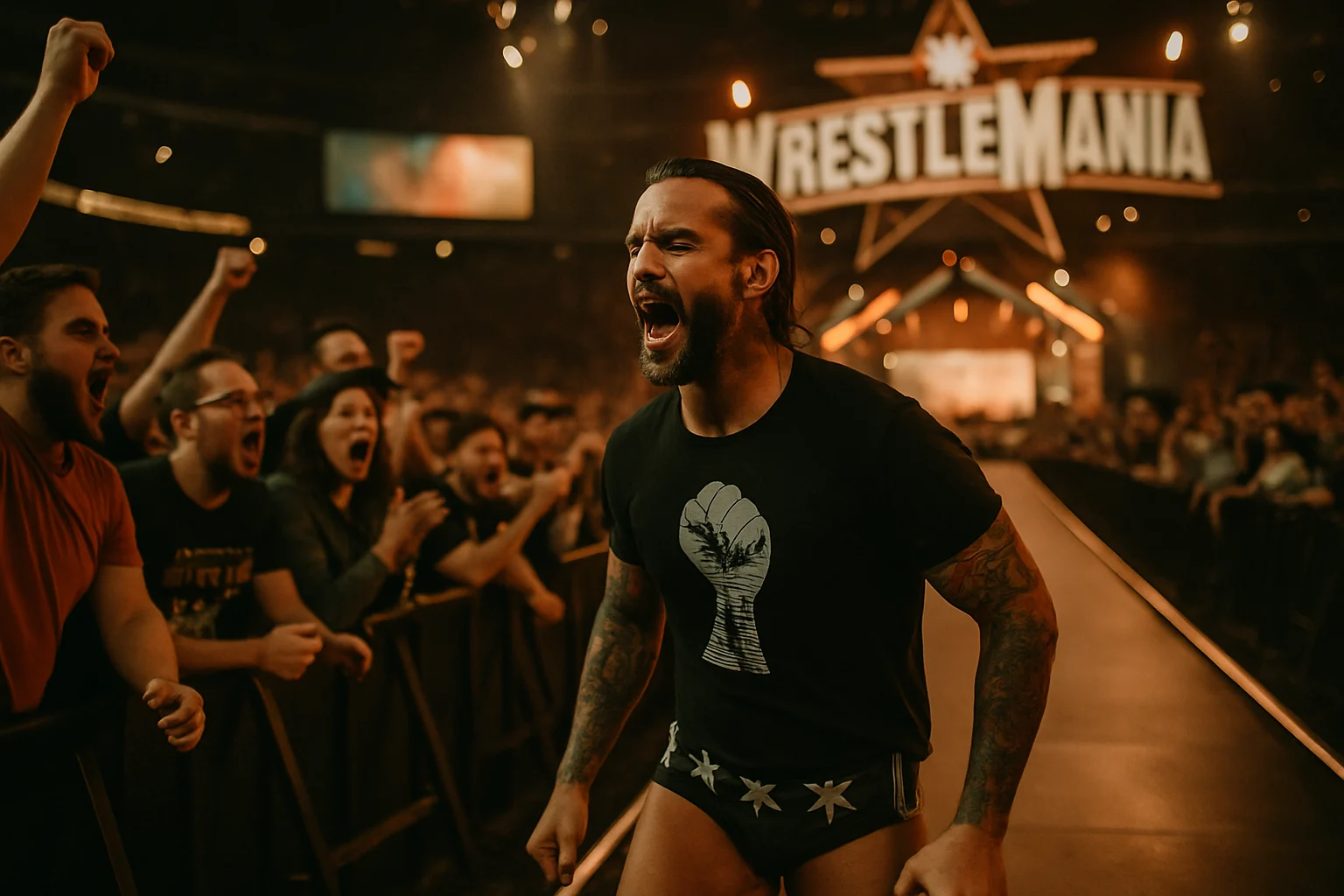
CM Punk’s Career Timeline: A Refusal to Follow the Script
Phillip Jack Brooks — born October 26, 1978, in Chicago — spent years on the independent circuit before most fans outside the Midwest knew his name. According to his Wikipedia biography, he built his reputation through Ring of Honor before making his way to ECW and eventually WWE’s main roster, where things got genuinely complicated in ways that shaped everything that followed.
The “CM” initials have been kept deliberately vague for his entire career. Early in his indie days, various meanings floated around — “Chick Magnet,” “Chicago Made” — but Punk has never officially confirmed any of them. At this point, the ambiguity is clearly intentional. It fits someone who has always preferred to control his own narrative on his own terms.
| Era | Key Moment | Why It Mattered |
|---|---|---|
| 2005–2011 (WWE Rise) | Multiple ECW and WWE Championship reigns | Proved he could carry the main event despite not fitting the traditional WWE mold |
| 2011–2012 (Pipe Bomb Era) | Iconic live promo at Money in the Bank | Redefined the creative standard for wrestling promos across the entire industry |
| 2013–2014 (First Exit) | Left WWE citing burnout and creative frustration | Shocked the industry and sparked years of “will he return?” discourse |
| 2014–2017 (MMA Experiment) | UFC debut with Roufusport; went 0-1 | Showed willingness to take personal risks in a genuinely hostile environment |
| 2021–2023 (AEW Chapter) | Returned to wrestling via AEW, won titles | Generated AEW’s biggest debut ratings moment and reignited mainstream interest |
| 2023–Present (WWE Return) | Returned to WWE under Triple H’s creative leadership | Among the most-searched WWE figures heading into WrestleMania 42 |
What makes this arc unusual isn’t the number of championships — plenty of wrestlers have collected titles. It’s that he’s managed to leave the company twice and return to legitimate main event positioning both times. That doesn’t happen by accident, and it doesn’t happen purely through nostalgia. There has to be something underneath it.
CM Punk’s career is defined not just by championship reigns, but by his ability to make every departure and return feel like an actual event — a rare quality in a business built almost entirely on spectacle.
The Pipe Bomb: What Everyone Knows and What Most People Miss
June 27, 2011. Money in the Bank. CM Punk sat cross-legged at the top of the entrance ramp, live microphone in hand, and said things on WWE television that simply were not supposed to be said out loud.
He called out Vince McMahon by name. He criticized the company’s creative structure. He named Ring of Honor and New Japan Pro-Wrestling — competing promotions — on a WWE broadcast. He declared himself the best wrestler in the world and accused the company of burying talent that didn’t fit their preferred mold. The microphone cut out before he finished. Whether that was planned or real is still debated.
“I’m leaving with the WWE Championship… and I’m going to go defend it where I want to, against who I want to.” — CM Punk, Money in the Bank 2011
The arena went briefly silent, then absolutely erupted. Why? Because it felt like someone was finally saying the quiet part loud. In a business where every word is scripted and every controversy is managed, Punk had delivered something that blurred the line between performance and actual grievance so completely that the distinction almost stopped mattering.
Here’s the part most retrospectives skip over: the Pipe Bomb didn’t just elevate Punk. It permanently shifted what audiences expected from wrestling promos. The appearance of authenticity — or better yet, actual authenticity — became the new creative benchmark. Every major promo since 2011 gets measured against that standard, whether the performers delivering it realize it or not. That’s a specific kind of cultural legacy that goes well beyond any title reign.
The original Pipe Bomb promo is on WWE’s official YouTube channel. Watch the live crowd reaction in real time — specifically the moment the mic gets cut. That five-second window tells you everything about why this promo still gets discussed fifteen years later.
CM Punk and Cody Rhodes at WrestleMania 42: Two Comebacks, One Stage
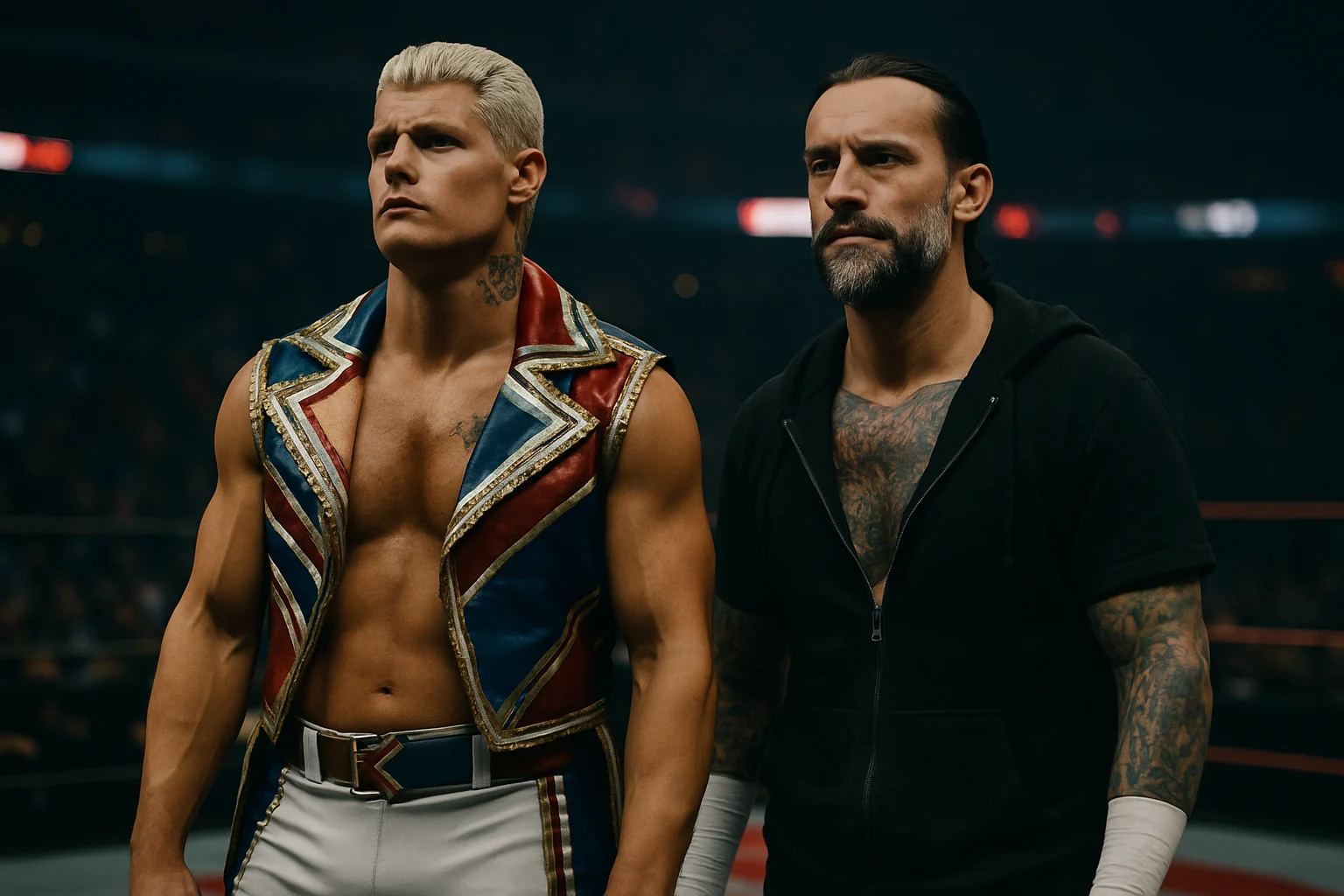
The WrestleMania 42 build has leaned hard into a specific visual: Cody Rhodes and CM Punk as a unified front against whatever opposition WWE has placed in their path. Based on SmackDown coverage leading into WrestleMania week, the go-home show made that alliance the emotional centerpiece of the entire build.
This pairing works because both men carry parallel histories. Cody Rhodes is the son of Dusty Rhodes who left WWE, rebuilt his entire identity through the independent scene and AEW, and came back to complete an emotional arc that became one of the more resonant storylines of the past several years. Punk walked a similar road — left under contentious circumstances, worked elsewhere, came back on his own terms. Two performers who refused to be written off, sharing the same frame.
 美國即時熱搜
 美國即時熱搜
 美國即時熱搜
 美國即時熱搜
 美國即時熱搜
That’s not just smart booking. That’s storytelling that respects what the audience actually remembers. Fans who followed both men through AEW, through the injuries, through the backstage controversies, understand what that visual represents. It’s not a photo opportunity. It’s a statement about what happens when a business underestimates people who have somewhere else to go.
It’s also worth noting that AJ Lee — Punk’s wife, and herself a former WWE Divas Champion — is trending simultaneously this April, sitting at 5,000+ weekly searches alongside Punk. That kind of parallel search interest suggests the broader WrestleMania 42 moment has broken through into mainstream pop culture territory, not just the core wrestling audience.
Think about what it takes to get a non-wrestling fan to Google a wrestling name. It usually requires a crossover moment — a viral clip, a celebrity connection, a controversy. The fact that Punk and AJ Lee are trending together in April 2026 suggests WWE’s WrestleMania marketing has achieved exactly that kind of mainstream penetration.
The MMA Chapter: What the 0-1 Record Actually Tells You
Every time CM Punk trends, someone surfaces his MMA record: 0-1-0. One fight, one loss. And a predictable wave of commentary uses that single data point to dismiss the entire experiment as a failure or a vanity project. That reading misses most of what actually happened.
The actual context: Per his ESPN MMA fighter profile, Punk competed as a welterweight in an orthodox stance, training with Roufusport — a legitimate camp with a real competitive track record. He debuted at age 37 against Mickey Gall, a fighter with years of professional MMA experience. The fight ended by submission in the first round. It was not competitive.
But here’s what the dismissive read ignores: the man was approaching 40, had zero professional MMA experience, and stepped into the UFC Octagon in front of a global audience with his entire reputation on the line. That requires a specific kind of willingness to fail publicly that most people issuing hot takes from their couch would not actually demonstrate if given the same opportunity.
- Age at UFC debut: 37 years old — an age when most MMA careers are already winding down
- Prior professional MMA record: Zero fights before stepping into the UFC
- Training camp: Roufusport, a respected Milwaukee-based gym with legitimate competitive credentials
- Result: First-round submission loss to Mickey Gall, a dedicated MMA competitor
- What it revealed: A willingness to pursue personal goals regardless of strategic reputation management
That same quality — pursuing what he actually wants rather than what’s strategically safe — is what made the Pipe Bomb land. It’s what made his AEW debut one of the most watched wrestling segments in years. The MMA chapter isn’t a detour from who CM Punk is. It’s a pretty clear expression of it.
Reducing CM Punk’s entire legacy to a single MMA loss strips away the context that makes the decision understandable. The 0-1 record tells you he attempted something genuinely difficult at an age when most athletes wouldn’t dare — it doesn’t define a career that includes multiple world championships and one of the most influential promos in wrestling history.
CM Punk Beyond the Ring: Comics, Acting, and the Full Picture
This part surprises people who only follow wrestling: CM Punk has a substantive creative career that exists completely independently of whatever storyline he’s currently running. His IMDB profile documents real acting credits across film and television, and his comic book writing work for Marvel isn’t a celebrity vanity project — it went through the standard editorial process alongside career comics creators.
He wrote for Marvel titles including Thor and Drax. He has appeared in multiple film and television productions. He maintains an active Instagram presence at @cmpunk with consistent engagement. These aren’t one-off celebrity cameos designed to generate press. They reflect genuine creative interests that existed independently of whatever was happening in his wrestling career at the time.
This matters because it explains a specific phenomenon: CM Punk generates search interest even between wrestling appearances. People aren’t only looking up his latest match result. They’re searching because he’s an interesting person with a perspective on things — the Straight Edge lifestyle, the WWE backstage politics he’s spoken about publicly, the MMA crossover, the comics work. That’s a different category of public profile than most professional wrestlers ever build, and it’s why his name keeps surfacing in trending searches regardless of whether he’s in an active storyline.
Why CM Punk Keeps Trending: The Anti-Hero Effect
The deeper question is worth sitting with for a second. In a media landscape absolutely saturated with manufactured celebrity and algorithm-optimized influencers, why does a professional wrestler with over two decades in the business still dominate search trends ahead of every major WWE event?
The answer centers on alignment. CM Punk built his entire brand on being the person who says uncomfortable truths regardless of strategic consequence. His Straight Edge lifestyle — no alcohol, no drugs, no tobacco — wasn’t a gimmick layered onto a character for TV. It’s his actual life. His criticisms of WWE management weren’t purely scripted material. He aired specific grievances publicly on the Colt Cabana podcast years after leaving, which became one of the most-discussed insider accounts in wrestling history. Whether you agreed with his positions or not, the positions were clearly real.
When a performer’s public persona and private reality line up that closely, audiences can sense it. The trust that builds from that alignment creates a fanbase that doesn’t expire between storylines. It persists across departures and returns, across industries, across years of silence. That’s not something you can manufacture with a marketing budget.
There’s also the villain-to-hero pipeline that Punk has navigated better than almost anyone in his generation. He’s been a beloved babyface. He’s been a genuinely despised heel. He’s occupied the uncomfortable middle ground where the crowd isn’t sure whether to cheer or boo, and he’s played that ambiguity better than most. That fluidity keeps audiences engaged because they can’t fully predict what they’re going to get — and unpredictability is a premium commodity in a business where fans have seen every trick in the playbook.
Looking at the full arc — from the documented indie circuit grind through the Pipe Bomb through AEW and now the WrestleMania 42 build — what stands out most is how consistent his core identity has remained while the industry around him transformed completely. The business in 2026 looks almost nothing like the business in 2006. CM Punk still sounds like himself. In professional wrestling, that’s rarer than any championship belt.
If you’re into broader sports storylines and comeback narratives, the Wild vs Stars 2026 NHL Playoffs breakdown over at MaxePro covers a similar theme — teams and players refusing to be counted out when the stakes are highest. And for another athlete whose longevity keeps defying expectations, the Stephen Curry 2026 career analysis is worth reading alongside this one.
Frequently Asked Questions About CM Punk
What does “CM” actually stand for in CM Punk’s ring name?
CM Punk’s real name is Phillip Jack Brooks, born October 26, 1978, in Chicago. The meaning of “CM” has never been officially confirmed — Punk has given playful non-answers for his entire career, and various meanings like “Chick Magnet” or “Chicago Made” circulated in his indie days without ever being verified. At this point the ambiguity appears to be a deliberate choice. Punk has said publicly that “CM has always stood for one thing” without completing the sentence, which is exactly the kind of controlled mystique he’s maintained throughout his career.
Why did CM Punk leave WWE the first time and what brought him back in 2023?
Punk left WWE in January 2014 after years of friction with management over creative direction, his health while working injured, and what he described as a lack of respect from company leadership. He later detailed specific grievances on the Colt Cabana podcast, which became one of the most-discussed insider accounts in wrestling history. His 2023 return came under a structurally different situation — Triple H had taken over creative direction following Vince McMahon’s departure, and the environment Punk returned to was substantially different from the one he had clashed with nearly a decade earlier.
How did CM Punk actually do in MMA and why did he try it in the first place?
CM Punk went 0-1 in professional MMA, losing by first-round submission to Mickey Gall in his UFC debut. He trained with the Roufusport camp and competed as a welterweight. The fight wasn’t competitive, but the context matters: Punk was 37 with no prior professional MMA experience. Per his ESPN MMA fighter profile, the attempt was real — not a scripted exhibition. He has cited a genuine personal interest in martial arts as the motivation, which tracks with the pattern of pursuing personal goals regardless of how they look from the outside.
What is CM Punk’s specific role in the WrestleMania 42 storyline?
Based on SmackDown coverage heading into WrestleMania 42, CM Punk is aligned with Cody Rhodes as part of the main event build. The go-home episode featured both men together in a closing segment that served as the emotional capstone of the WrestleMania narrative. Specific match structure details are part of the ongoing storyline, but Punk’s positioning in the main event orbit for the show is confirmed by the weekly SmackDown build and WWE’s promotional materials heading into April 2026.
What separates CM Punk from other major wrestling stars of his generation?
The clearest distinction is the alignment between his on-screen character and his actual personality. Unlike performers who are entirely character constructions, Punk’s real-life positions — on Straight Edge, on WWE management, on his MMA crossover — were clearly his own, and audiences consistently picked up on that. The result is a category of fan loyalty that outlasts any individual storyline and survives the controversies that inevitably come with a career as long and outspoken as his. He’s also one of the few wrestlers of his era to build a credible parallel career in comics and acting, which gives him cultural surface area that most performers in the business never develop.
WrestleMania 42 is shaping up to be one of the most emotionally loaded WWE events in recent memory. CM Punk standing near the center of it isn’t a surprise to anyone who’s been paying attention — it’s the logical endpoint of a career that has always found its way back to the biggest stages, usually on its own terms. Whatever happens on WrestleMania weekend, one thing is clear: Punk being there makes it feel like it matters. That’s the whole trick, and almost nobody else in the business can pull it off.
 美國即時熱搜
 美國即時熱搜
 美國即時熱搜
 世界盃
世界盃
 中國即時熱搜
 台灣即時熱搜
 台灣即時熱搜
 台灣即時熱搜