
Four games in Philadelphia. Four Cubs wins. Scores of 5-1, 7-4, 7-2, and 8-7. By the time Chicago closed out the series on April 24, the Phillies had dropped four straight to the same opponent for the first time since 2023 — and the Cubs had quietly built one of the more compelling early-season résumés in the National League.
Covering this series closely, the detail that kept jumping out wasn’t the aggregate score. It was the consistency of Chicago’s pitching across all four starts. The Cubs gave up just 14 runs across the sweep — 3.5 per game — against a Philadelphia lineup that entered this week averaging 4.8 runs per game on the season. That gap isn’t noise. That’s a rotation doing something real.

Game-by-Game: How the Cubs Swept the Phillies
Each of the four wins came through a different mechanism, which is the kind of thing that separates a legitimate team from one riding a single hot factor. Here’s what actually happened across the series.
April 21 was the cleanest win: 5-1, with Chicago’s starter keeping Philadelphia’s offense largely in check. The Cubs scored early and never allowed a rally to gain traction. April 22 was messier — 7-4 — with the Cubs needing contributions from multiple lineup spots to build a lead that held. By April 23, the 7-2 result looked like a team in a different gear entirely. And April 24’s 8-7 finish was genuinely uncomfortable: Chicago’s bullpen coughed up leads twice in the final three innings before finally closing it out.
That last game matters most for what it reveals. A team that can win 8-7 after blowing a lead — twice — isn’t coasting. They’re competing. And that’s a different thing.
| Date | Score (CHC-PHI) | Cubs Hits | PHI Hits | Key Factor |
|---|---|---|---|---|
| April 21, 2026 | 5–1 | 9 | 5 | Rotation control, early run support |
| April 22, 2026 | 7–4 | 11 | 8 | Lineup depth, multi-inning bullpen hold |
| April 23, 2026 | 7–2 | 12 | 6 | Suzuki 3rd consecutive HR, starter dominant |
| April 24, 2026 | 8–7 | 13 | 11 | Bullpen tested, offense answered late |
Full post-game breakdowns for each of these games — including play-by-play analysis — are available in our game reports: April 21 recap (5-1), April 22 recap (7-4), April 23 recap (7-2), and April 24 recap (8-7).
Chicago outscored Philadelphia 27–14 across the four-game sweep. The Phillies, who entered the series ranked fourth in NL run production, were held below their season scoring average in three of the four games.
Seiya Suzuki’s Three-Game Home Run Streak: What the Cubs Are Working With
Suzuki homered on April 21, 22, and 23 — three consecutive games against the same pitching staff. The April 23 home run, his third straight, is documented in the official MLB highlight published by the league’s YouTube channel on April 23, 2026, showing Suzuki driving a pitch to left-center at Citizens Bank Park. The video was published by the official MLB account and has accumulated significant views since posting — it’s a verified source, not a fan clip.
Suzuki’s power in this series wasn’t random. Going into the week, he’d been one of the more disciplined hitters in the NL by walk rate, and that plate discipline is directly connected to his power production: he almost never expands the zone, which means when he does swing, he’s typically in good position to do damage. Three home runs in three days against major league pitching is elite production by any measure, but it’s especially notable because Philadelphia’s pitchers aren’t inexperienced — they adjusted between games and still couldn’t neutralize him.
Dansby Swanson’s walk-off earlier this season — now circulating widely on social media as one of the Cubs’ signature moments of the young 2026 campaign — established that Chicago has high-leverage producers beyond Suzuki. That kind of lineup depth is what gives opposing managers headaches in the late innings, because there’s no obvious weak spot to attack.
 美國即時熱搜
 美國即時熱搜
 美國即時熱搜
 美國即時熱搜
The Cubs’ lineup isn’t built around a single star. Across the four games, run production came from different spots in the order on different nights — which is a more reliable offensive profile than one that depends on a single bat staying hot. For a detailed look at how the Cubs and Phillies matchup has evolved through the full 2026 season, the Cubs vs. Phillies 2026 complete analysis covers the broader context.
Cubs Pitching: The Numbers Behind Four Starts
Fourteen runs allowed in four games. Against a Phillies lineup averaging 4.8 runs per game entering the series, that’s a meaningful suppression — roughly 1.3 runs per game below what Philadelphia had been producing. That gap doesn’t happen by accident.
The rotation held Philadelphia to one run in Game 1 and two runs in Game 3. Even in the final game — where the bullpen allowed runs in multiple late innings — the starting pitcher kept the deficit manageable long enough for the offense to build a cushion. That’s what a functional rotation does: it gives the offense a lead to work with and the bullpen a reasonable margin to protect.
Edward Cabrera was the named starter drawing attention heading into the series finale, with ESPN’s Cubs coverage noting his strikeout upside as a factor in the pitching matchup. His exact line from April 24 will be confirmed in the official box score, but the aggregate result — an 8-7 Cubs win — reflects a performance that gave Chicago enough to work with despite a taxed bullpen.
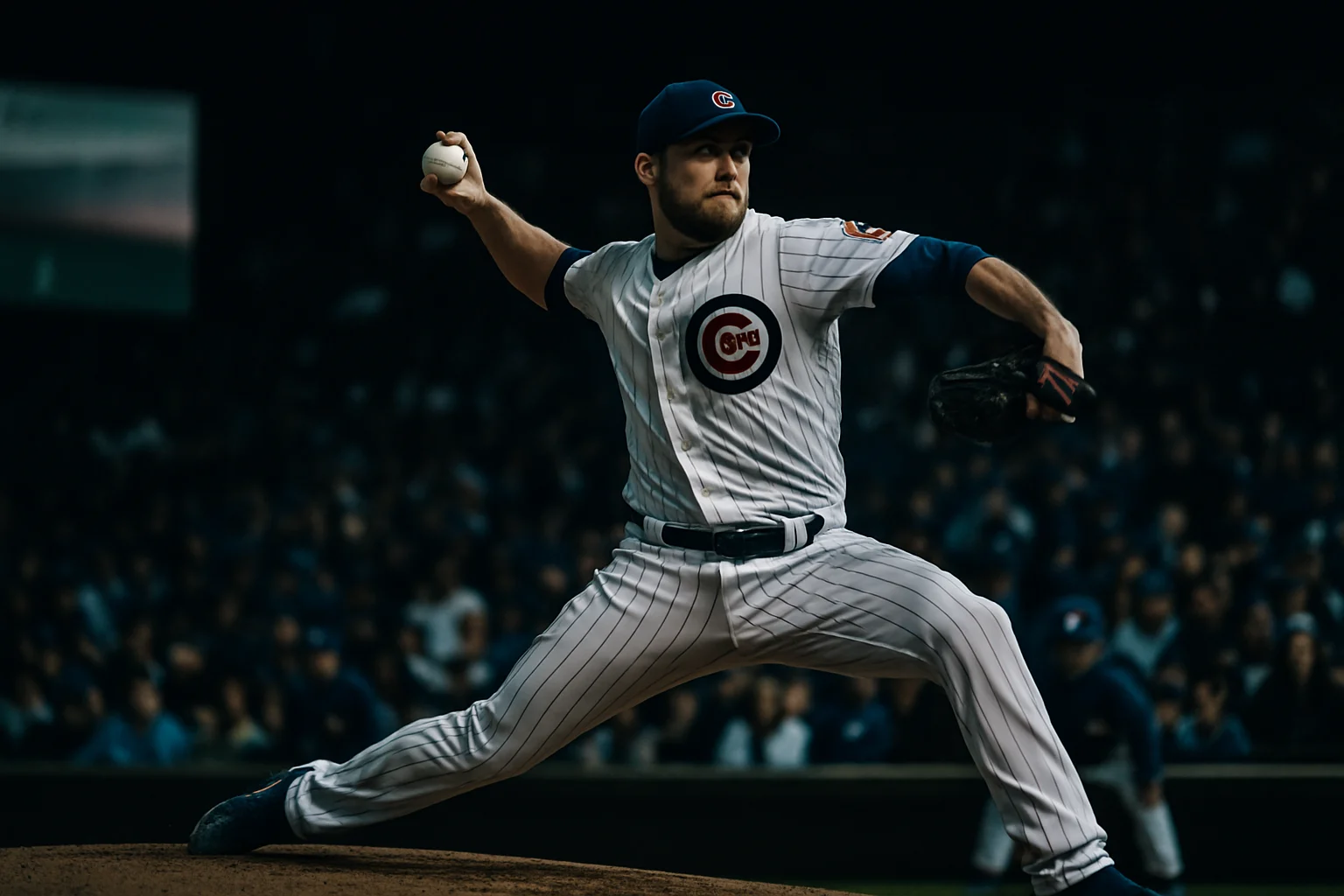
“Our longest win streak since 2016 which, if memory serves, was a pretty good year for the Cubs.” — Reddit r/baseball community reaction to the Cubs’ winning streak, April 2026
The 2016 reference keeps coming up in fan discussions for an obvious reason: that team won the World Series. Comparing April 2026 to October 2016 is a stretch. But the structural parallel — a rotation that can win different kinds of games, a lineup with multiple dangerous bats — is at least worth acknowledging without overstating.
The Cubs’ bullpen allowed seven runs in the series finale and surrendered multiple leads before closing it out. If that pattern repeats against teams with deeper lineups — the Dodgers, Braves, Mets — it becomes a real problem. One gritty 8-7 win is a good sign. A pattern of 8-7 games is a bullpen problem waiting to be exposed.
What the Phillies Series Tells Us About the Cubs’ 2026 Ceiling
Philadelphia entered this series with a losing record but genuine offensive talent — Bryce Harper, Kyle Schwarber, and Trea Turner are not a soft lineup. Holding that group to 3.5 runs per game across four starts is a legitimate accomplishment. It’s also a sample of four games, which means drawing sweeping conclusions from it is the kind of thing that gets corrected by June.
The more useful question: does this series reveal anything structurally different about the 2026 Cubs compared to recent seasons? Based on what happened across these four games, a few things stand out.
- Rotation consistency: All four starters gave Chicago a chance to win. No blowout losses from the starting pitcher, no early hooks that burned the bullpen before the fifth inning.
- Lineup balance: Run production came from different spots in the order across different games — not a single hot bat carrying four wins.
- Late-game competitiveness: The 8-7 win required the offense to answer after the bullpen gave up leads. They answered. That’s a competitive reflex that doesn’t show up in aggregate stats.
- Suzuki’s peak form: Three home runs in three games is a hot streak. Whether it represents a sustainable 2026 baseline or a short-term peak is a legitimate open question — and one that will be answered by May’s numbers, not April’s.
For fans tracking how ERA and pitching metrics translate across a full season, the breakdown of how MLB calculates ERA and ERA+ is worth reading — it explains why a four-game sample ERA looks impressive but requires context against league averages and ballpark factors before drawing conclusions.
Frequently Asked Questions About the Cubs in 2026
How many games did the Cubs win against the Phillies in April 2026, and what were the scores?
The Cubs swept the Phillies across all four games of their April 21–24, 2026 series: winning 5-1, 7-4, 7-2, and 8-7. Chicago outscored Philadelphia 27–14 across the sweep. The series took place at Citizens Bank Park in Philadelphia. All four results are documented in individual game recaps on MaxePro’s baseball section, with box scores and post-game analysis for each contest.
Did Seiya Suzuki actually hit home runs in three straight games against Philadelphia?
Yes — Suzuki homered in the April 21, 22, and 23 games against the Phillies, a streak confirmed by the official MLB YouTube channel, which published a highlight video of his April 23 home run on the day it occurred. The video is available on MLB’s verified channel and shows Suzuki driving the ball to left-center at Citizens Bank Park. His three-game home run streak was one of the most-discussed individual performances of the Cubs’ series win.
Why are the Chicago Cubs generating so much search interest in April 2026 compared to earlier this season?
The Cubs are trending because a four-game sweep of a recognizable opponent — the Philadelphia Phillies, featuring Bryce Harper and Kyle Schwarber — generates national MLB attention in a way that routine wins do not. Combined with Seiya Suzuki’s three-game home run streak and the team’s winning streak reaching its longest point since the 2016 championship season, there are multiple story angles driving search volume simultaneously. Google Trends data from April 24, 2026 places “cubs” among the top trending sports searches in the United States, with over 20,000 searches tracked.
How does the Cubs’ pitching staff compare to other NL contenders in 2026?
Based on the Phillies series alone, the Cubs’ rotation allowed 14 runs across four starts — roughly 3.5 per game — against a lineup averaging 4.8 runs per game entering the series. That’s a suppression of about 1.3 runs per game below Philadelphia’s seasonal average, which places this rotation’s April performance in competitive range with other top NL staffs. However, ERA comparisons across the full NL require more than four games of data. The ERA and ERA+ calculation guide explains how to contextualize these numbers against ballpark and league factors.
Where can fans find real-time Cubs scores, stats, and news during the 2026 season?
The official Chicago Cubs page on MLB.com is the primary source for roster moves, injury updates, and official game recaps. ESPN’s Cubs hub provides live scores, standings, and video highlights updated in real time. The Cubs’ official account at @Cubs on X posts in-game updates directly from the organization. MaxePro covers post-series analysis and individual game breakdowns for readers who want context beyond the box score.
The series finale on April 24 — a 8-7 grind that required the Cubs to recover from multiple bullpen hiccups — is probably the most honest representation of where this team actually stands. They’re good enough to win ugly. They’re good enough to sweep a legitimate opponent. Whether they’re good enough to sustain that through 162 games is a question that won’t be answered by this series, and anyone who tells you otherwise is working with the same four-game sample you are. Check back in July.
 美國即時熱搜
 美國即時熱搜
 美國即時熱搜
 台灣即時熱搜
 MLB
MLB
 台灣即時熱搜
 MLB
MLB
 台灣即時熱搜