
Real Madrid beat Alavés 2-1 last week. Kylian Mbappé scored. Vinícius Júnior scored. Madrid cut Barcelona’s La Liga lead. Spanish football Twitter briefly forgot it had spent most of the season writing Mbappé off. And here we are again — the same cycle that’s defined his entire first year at the Bernabéu, where a single good result reshuffles everyone’s opinion of a player whose Madrid career has genuinely been harder to read than his PSG years ever were.
I’ve been tracking this closely since his debut last August, and the honest answer is: the picture is more complicated than either the “Mbappé is struggling” narrative or the “Mbappé is back” celebration suggests. Let’s actually look at what’s happening.
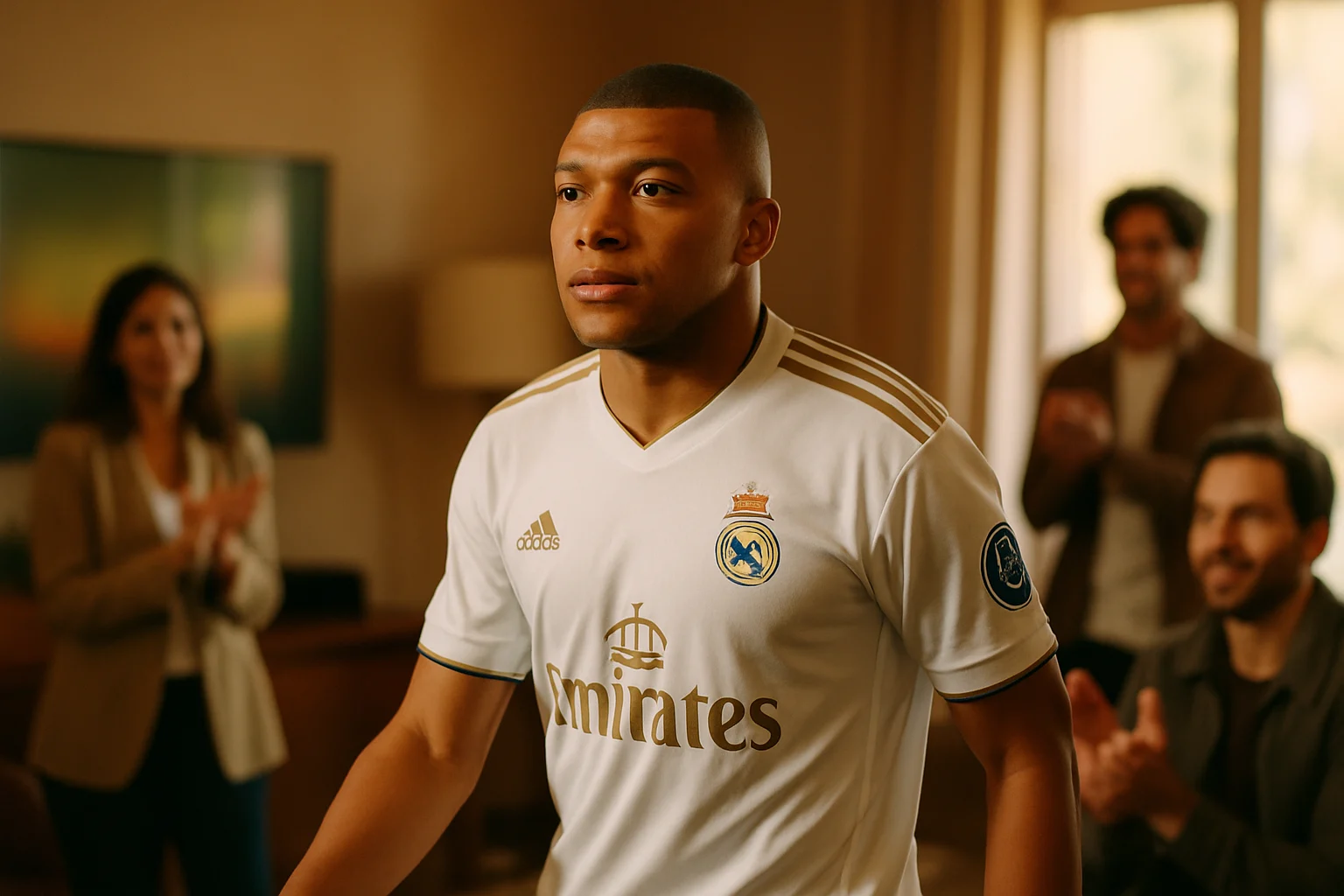
What Kylian Mbappé’s 2025-26 La Liga Numbers Actually Show
Strip away the discourse and look at the output. According to ESPN’s official La Liga player page for Mbappé, he’s been a consistent starter across Madrid’s 2025-26 campaign — but his goal contribution rate has been uneven in a way that’s structurally different from his PSG output, not just quantitatively lower.
At PSG, Mbappé’s goals came in clusters, often on the back of sustained periods where the entire attacking system ran through him. At Madrid, his scoring has been more isolated — big moments punctuating stretches where his influence on build-up play was limited. That’s a meaningful distinction. A striker who scores in big games but disappears in between is a different kind of player than one who dominates consistently, and Madrid’s coaching staff has had to work around that reality all season.
The Alavés goal fits the “big moment” pattern. BBC Sport’s match report confirmed the 2-1 scoreline with Mbappé and Vinícius both on the scoresheet — Madrid’s two highest-profile attackers combining in a result that directly pressures Barcelona at the top of the table. That matters in context. It does not erase the missed penalties, the goalless stretches, or the tactical friction that dominated the first half of the campaign.
Mbappé’s 2025-26 La Liga season is best described as a player delivering in high-stakes moments while still finding his rhythm in the week-to-week grind of Spanish football. Both things are true simultaneously.
| Performance Dimension | First Half of Season (Aug–Dec 2025) | Second Half of Season (Jan–Apr 2026) |
|---|---|---|
| Goal involvement in decisive fixtures | Sporadic; notable misses in penalty situations | Higher; Alavés, contributions in European ties |
| Positional discipline (central vs wide) | Frequent drift to left, overlapping with Vinícius | More consistent central positioning emerging |
| Media narrative | Dominant “adaptation crisis” framing | Shifting toward “settling in” framing |
| Penalty record | High-profile misses; confidence questions raised | Continued as designated taker despite pressure |
Sources: BBC Sport match reports, Managing Madrid tactical analysis, Al Jazeera match coverage — all April 2026.
When reading Mbappé’s La Liga stats this season, separate “starts” from “dominant performances” — he’s had plenty of the former without always delivering the latter. The gap between those two things is the actual story of his Madrid year.
Kylian Mbappé and Vinícius: The Overlap Problem, Explained Without the Clichés
Every football outlet has written about the Mbappé-Vinícius positional conflict. Most of those pieces say the same three things: both players want the left channel, the hierarchy was unclear, Madrid needed to choose. That framing is accurate but incomplete — and it misses what’s actually interesting about how the problem has evolved.
The tactical issue isn’t that two left-footed attackers want the same space. That’s a starting point, not an explanation. The deeper issue is that Vinícius’s effectiveness depends on receiving the ball wide and driving at defenders, while Mbappé’s most dangerous runs are diagonal, cutting toward goal from a slightly wider starting position. When the system gives Vinícius width and asks Mbappé to operate more centrally, both players get workable lanes. When that structure breaks down — as it did repeatedly in the first half of the season — they genuinely do compete for the same square meter of pitch.
“Real Madrid close on Barcelona as Mbappe and Vinicius net against Alaves.” — Al Jazeera, April 2026
The Alavés result was notable precisely because both scored in the same game without the match report suggesting tactical chaos. That’s progress. Whether it reflects a genuine tactical solution or a single game where the spacing happened to work is a fair question — and one that won’t be fully answered until Madrid face a defensively disciplined Champions League opponent where the spacing gets compressed.
Speaking of which: multiple outlets including Managing Madrid reported that Madrid’s penalty denial in a recent draw — described as a “costly draw” in their coverage — was a flashpoint that revealed how tight the La Liga title race margins actually are. A denied spot kick in that context isn’t just a refereeing grievance; it’s a window into how much pressure is riding on every individual moment right now.
 美國即時熱搜
 美國即時熱搜
 美國即時熱搜
 美國即時熱搜
 美國即時熱搜
Reports about Madrid’s Champions League knockout round progression remain fluid as of April 22, 2026. Check live sources — ESPN or UEFA’s official site — rather than relying on any single article’s framing of where the tie stands.
For a broader look at how Real Madrid’s domestic form feeds into World Cup squad projections this summer, our 2026 World Cup squad list breakdown covers how La Liga performances are influencing national team selections across all 48 competing nations.
The Free Transfer That Wasn’t Really Free: What Mbappé’s Madrid Move Actually Cost
No transfer fee between PSG and Real Madrid — that part is accurate, and Real Madrid’s official player profile confirms his biographical details: born December 20, 1998, in Paris; height 1.78m; weight 75kg. But “free transfer” as a description of what this move cost is misleading in a way that matters for understanding Mbappé’s situation at the club.
Free transfers at this level involve substantial signing-on arrangements. They also involve something less quantifiable: the expectation premium. When a club pays €180 million for a player, the fanbase builds in patience for adaptation. When a player arrives without a fee, the implicit expectation is that he’s ready to produce immediately — because the club didn’t “pay” for the adjustment period. That’s not how player development actually works, but it’s how supporter psychology operates, and Mbappé has felt that pressure throughout this season.
At PSG, the setup was structurally designed around his output. Squad decisions, tactical systems, press conference framing — all of it ran through Mbappé as the central reference point. Madrid’s institutional culture is genuinely different. The club has absorbed elite players for decades by eventually integrating them into a collective identity rather than bending the collective to any individual. That process takes time, and it’s often uncomfortable to watch from the outside while it’s happening.
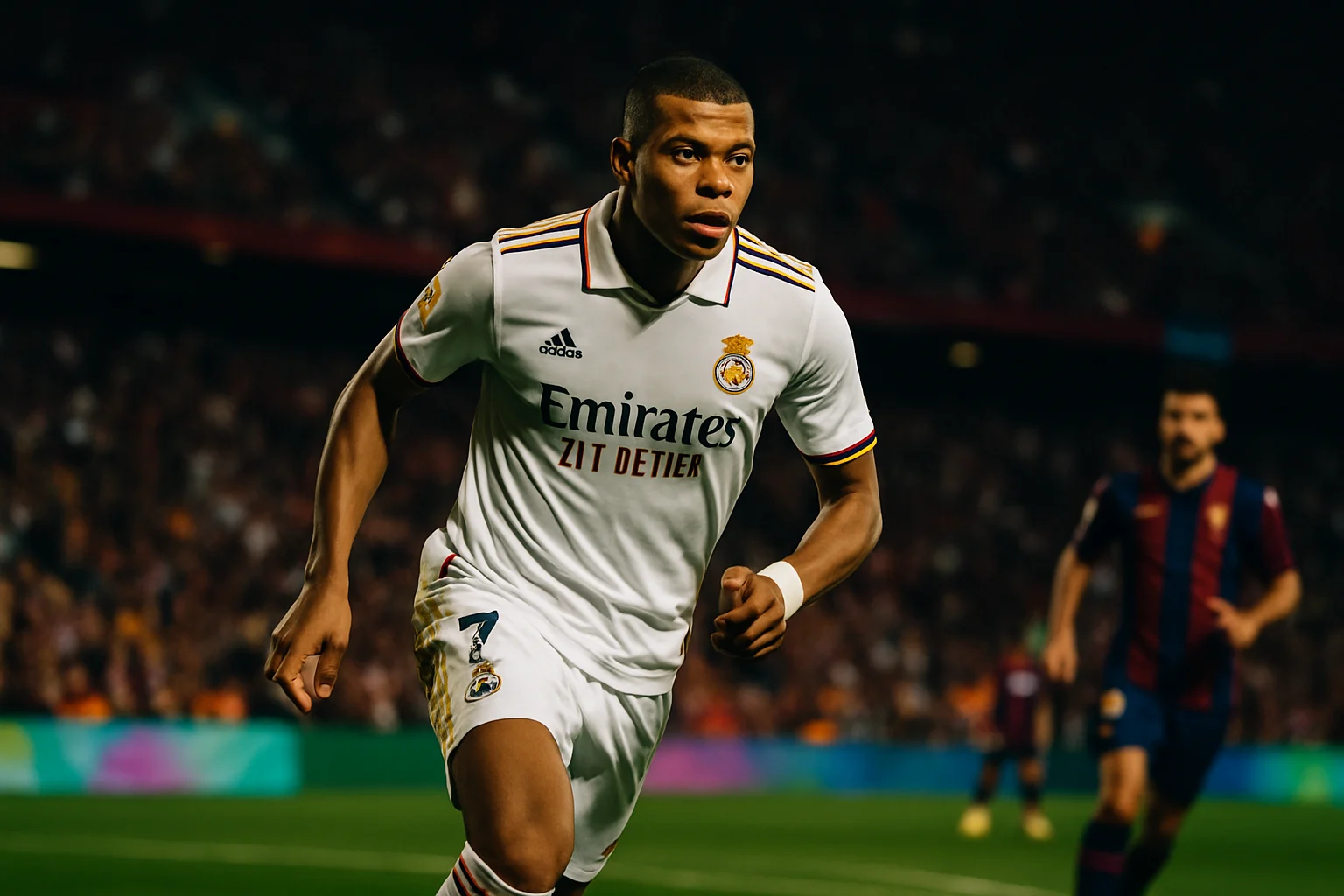
What Mbappé has gained from the move that PSG structurally couldn’t offer: exposure to a winning culture built on sustained European success rather than annual reconstruction. Madrid’s ability to manage squad pressure across a 50-plus game season — and to make tactical adjustments mid-campaign without public chaos — is institutional knowledge that Mbappé is absorbing in real time. That’s worth something that doesn’t show up in a goals-per-game column.
Compare this to how Zinedine Zidane’s arrival at Madrid in 2001 was initially described as underwhelming by sections of the Spanish press. His first full season produced mixed reviews. His second produced a Champions League-winning goal at Hampden Park. The Madrid adaptation timeline has historical precedent — which doesn’t guarantee the same outcome for Mbappé, but does suggest that mid-season judgment is often premature.
Kylian Mbappé as France Captain: What the World Cup Timing Actually Means
The 2026 FIFA World Cup kicks off in June across the United States, Canada, and Mexico — which means Mbappé has roughly six to eight weeks between the end of Real Madrid’s season and France’s first group stage fixture. That’s a tight turnaround for a player who will have completed a full La Liga campaign plus whatever Champions League rounds Madrid survive.
France’s squad depth is genuine. This isn’t a one-man team, and Mbappé’s captaincy doesn’t require him to score in every game for France to advance. But the captaincy does add a specific kind of pressure that his previous World Cup appearances — 2018 as a teenage winner, 2022 as a finalist — didn’t involve. Leading a dressing room through a 48-team tournament, managing younger players’ confidence, handling media obligations in three host countries across a month-long campaign: that’s a different job than being the team’s best attacker.
- 2018 World Cup: Mbappé won as a 19-year-old, becoming the second teenager after Pelé to score in a World Cup final — a documented historical fact that needs no hedging
- 2022 World Cup: France lost the final to Argentina on penalties after Mbappé scored a hat-trick — one of the most striking individual performances in a losing final in the tournament’s history
- 2026 World Cup: Mbappé captains France at 27, in the physical prime window, with more tournament experience than almost any other player in the competition
The fatigue question is real and underreported. If Madrid’s season extends into late May — which Champions League progression makes entirely plausible — Mbappé arrives in the United States carrying significant accumulated load. France’s coaching staff will need to make active decisions about his group stage minutes rather than simply playing him every game at full intensity. That’s a management call, not a fitness crisis, but it’s worth watching closely.
Our 2026 World Cup format and schedule guide covers the expanded 48-team structure in detail — including how the group stage format affects rest periods between matches, which is directly relevant to player load management for squads like France.
Mbappé’s 2026 World Cup is happening now — not as a future hypothetical, but as an immediate next step after a Madrid season that has tested him in ways his PSG years never did. How he carries those lessons into the tournament is the actual question.
For the wider picture on how France stack up against the other title contenders this summer, the 2026 World Cup odds breakdown covers the full field with specific probability analysis for the leading nations.
Frequently Asked Questions About Kylian Mbappé
How many goals has Kylian Mbappé scored for Real Madrid in the 2025-26 La Liga season?
ESPN’s official La Liga stats page for Mbappé tracks his 2025-26 output across starts, goals, and assists — and his numbers have been uneven across the season, with contributions clustering around high-profile fixtures rather than being distributed consistently across matchdays. For the current confirmed figures, check ESPN’s Mbappé player page directly, since live statistical totals shift with each matchday and any figure cited in a static article will be outdated within days. What’s confirmed from match reporting: he scored in the April 2026 win over Alavés that cut Barcelona’s lead at the top of the table.
Why has Kylian Mbappé been less dominant at Real Madrid than he was at PSG?
The structural answer is that PSG built their entire attacking system around Mbappé as the primary reference point, while Real Madrid runs a collective system where multiple elite attackers — Vinícius Júnior chief among them — have established roles that predate Mbappé’s arrival. Adapting to a system you don’t control, rather than one built for you, takes time regardless of individual quality. The positional overlap with Vinícius on the left side created specific tactical problems that Madrid’s coaching staff spent the first half of the 2025-26 season working through. By April 2026, the partnership is functioning better than it was in August — but “better than before” and “fully optimized” are not the same thing.
Is Kylian Mbappé the best player at Real Madrid right now, or is Vinícius Júnior ahead of him?
Based on 2025-26 season performance, the honest answer is that Vinícius has been more consistently influential across the full campaign, while Mbappé has delivered more in isolated high-stakes moments. Vinícius arrived at Madrid first, built his standing over multiple seasons, and won a Ballon d’Or before Mbappé joined — that track record gives him a baseline of trust within the squad’s tactical structure that Mbappé is still establishing. Whether Mbappé overtakes that standing depends heavily on his Champions League and World Cup performances over the next two months. Right now, it’s genuinely close — which is itself a notable development given how turbulent Mbappé’s Madrid start was.
What are the realistic expectations for Kylian Mbappé at the 2026 World Cup as France captain?
Realistic expectations: France advance deep into the tournament, Mbappé contributes goals in knockout rounds, and the captaincy role is managed without visible dressing room friction. That’s achievable. The ceiling — Mbappé lifting the trophy as captain, completing a set of 2018, 2022 finalist, 2026 winner — is possible but requires France to beat a field that includes strong Brazil, England, and Spain squads. The floor is a group stage exit that would be genuinely shocking given France’s squad quality and would reshape how his entire career narrative is discussed. The most likely outcome sits somewhere between those extremes: a deep run, significant personal contributions, and a tournament that adds to his legacy without definitively closing any argument. See our full 2026 World Cup player analysis for how France’s squad compares to the other contenders.
When did Kylian Mbappé join Real Madrid and what were the transfer details?
Mbappé joined Real Madrid on a free transfer after his contract with PSG expired — no fee was paid between clubs. His arrival followed years of reported interest from Madrid that had previously been blocked by PSG, including a period where Mbappé had reportedly agreed terms with Madrid before ultimately re-signing with PSG. Real Madrid’s official club website lists his full details: born December 20, 1998, in Paris; 1.78m tall; 75kg. He has been part of the first-team squad throughout the 2025-26 season and captains the French national team heading into the 2026 World Cup this summer.
The next two months will be more revealing about Mbappé’s actual standing than the entire preceding season. Champions League knockout football and a World Cup with France — both arriving before July — will produce a clearer picture than any amount of La Liga analysis can provide. Watch the games. The data will follow.
 美國即時熱搜
 美國即時熱搜
 美國即時熱搜
 台灣即時熱搜
 La Liga
 台灣即時熱搜
 台灣即時熱搜
 台灣即時熱搜