
Last week, AccuWeather meteorologist Geoff Cornish was covering a live severe weather event on April 27, 2026 — radar spinning, storm chasers in the field, tornado warnings firing off in real time. And millions of people were watching, not because it was entertainment, but because they were genuinely scared it was heading toward their town. That’s the reality of severe weather in 2026: it’s not a background news story anymore. It’s personal.
Whether you’re in Texas watching a wall cloud build on the horizon, or in Minnesota bracing for a late-spring ice storm, or just trying to figure out if your flight is going to get canceled because of a severe rainfall warning — severe weather touches nearly every American’s life at some point. And yet, most people are still wildly underprepared for it. Let’s fix that.

WhatSevereWeatherActuallyMeans(AndWhytheDefinitionMatters)
Here’s something that trips people up constantly: not all bad weather is “severe weather.” Technically speaking, severe weather refers to any dangerous meteorological event with the potential to cause damage, serious social disruption, or loss of human life. But meteorologists use a much tighter definition — and understanding it could literally save your life.
According to the AccuWeather Severe Weather Map, severe weather events include tornadoes, severe thunderstorms (with winds exceeding 58 mph or hail at least 1 inch in diameter), flash floods, blizzards, ice storms, and extreme heat events. A regular rainstorm? Not severe. A thunderstorm that drops golf ball-sized hail and spins up a funnel cloud? Absolutely severe.
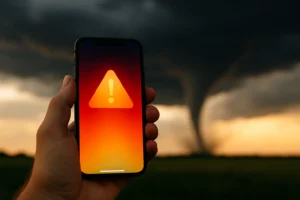
Why does this distinction matter? Because the warning system is built around these specific thresholds. When you hear “severe thunderstorm warning” on your phone, it means measured or estimated conditions have already crossed those lines — not that they might. That’s your cue to act, not to scroll Twitter for five more minutes.
A Severe Thunderstorm Warning means dangerous conditions are happening NOW or imminent — not a possibility. Treat every warning as real until proven otherwise.
The National Weather Service and NOAA’s Storm Prediction Center track these events 24/7, issuing watches (conditions are favorable for severe weather) and warnings (severe weather is occurring or about to occur). Knowing the difference between a watch and a warning is one of the most underrated pieces of weather knowledge out there. A watch means get ready. A warning means move now.
SevereWeatherAwarenessWeek2026:WhatStatesAreDoingDifferentlyThisYear
Every spring, states across the country run their own version of Severe Weather Awareness Week — and 2026 has seen a notable uptick in how seriously local agencies are taking it. Colorado’s Severe Weather Awareness Week ran April 16–22, 2026, featuring statewide tornado drill exercises and updated public education campaigns focused specifically on mobile home safety and nighttime tornado preparedness. Those two scenarios — mobile homes and sleeping residents — account for a disproportionately high share of tornado fatalities.
Minnesota ran a similar campaign focused on the state’s unique severe weather profile: the kind of severe storms that can drop baseball-sized hail and 70+ mph straight-line winds without ever producing a tornado. A lot of people in the upper Midwest underestimate these events because there’s no dramatic funnel cloud — but a derecho (a widespread, long-lived wind storm) can cause as much structural damage as a weak tornado.
Texas, meanwhile, has been dealing with an especially active spring severe weather season. The Texas severe weather forecast for April and May 2026 has been dominated by a persistent clash between Gulf moisture and dry air from the west — classic supercell territory. Storm chasers have been working overtime across the Panhandle and South Plains.
“The atmosphere doesn’t care about your schedule. When conditions align for severe weather, the storms will happen — whether it’s 2 PM on a Tuesday or 3 AM on a Saturday night. Nighttime tornadoes are significantly more deadly because people are asleep and don’t hear warnings.”
—GeoffCornish,AccuWeatherMeteorologist,April27,2026livecoverage
The broader point of Severe Weather Awareness Week isn’t just to scare people — it’s to build the reflexive habits that keep you alive when your brain is in panic mode. Knowing your shelter location before the storm hits. Having a weather radio with battery backup. Understanding what your county’s outdoor warning sirens actually mean. These aren’t complicated things, but they require thinking about them before the emergency, not during it.
Speaking of which — if you want a deeper dive on specific storm types, our guide on tornado warnings and the life-saving truth behind them is worth bookmarking right now.
TheSevereWeatherEventsHittingHardestin2026
Let’s talk about what’s actually been happening this year, because 2026 has been a genuinely brutal severe weather season across multiple fronts.
SevereFloodRisk:TheUnderratedKiller
Flooding is the deadliest weather hazard in the United States — not tornadoes, not lightning — and yet it consistently gets the least respect from the public. The “turn around, don’t drown” campaign has been running for decades, and people still drive into flooded roadways. Just six inches of moving water can knock a person off their feet. Two feet can carry away most vehicles.
In 2026, the severe flood risk has been particularly elevated across the Mississippi Valley and parts of the Southeast, driven by above-normal precipitation and saturated soils from a wet winter. Flash flood warnings have been firing off with unusual frequency — and if you’re not sure what to do when one hits your area, our complete flash flood warning safety guide breaks it down step by step.
Never attempt to drive through a flooded road, even if it looks shallow. Flash flood water moves fast and is often deeper than it appears — and road surfaces beneath floodwater can be completely washed out.
SevereSnowandIceWarnings:SpringIsn’tSafe
One of the nastiest surprises severe weather can throw at you is a late-season ice storm. April ice events have hit parts of the northern Plains and Great Lakes region in 2026, catching people off guard because they’d already mentally checked out of “winter mode.” Ice accumulation of just 0.25 inches can make roads treacherous and bring down power lines — and half an inch can cause catastrophic damage to trees and infrastructure.
 美國即時熱搜
 美國即時熱搜
 美國即時熱搜
 美國即時熱搜
 美國即時熱搜
Severe snow and ice warnings carry a different kind of danger than tornado or flood warnings — the threat develops more slowly, but the aftermath can last for days. Hypothermia risk, carbon monoxide poisoning from improper generator use, and car accidents on black ice are the main killers. The preparation window is longer, but so is the danger window.
SevereHighTemperatureWarnings:HeatIsSneaky
Extreme heat kills more Americans annually than any other weather hazard. Full stop. And yet it’s the one that people consistently underestimate, probably because it doesn’t look dramatic on a radar screen. A severe high temperature warning means conditions are dangerous enough to cause heat stroke in healthy adults — not just discomfort, but actual medical emergency territory.
In 2026, parts of the Southwest have already seen early-season heat events pushing toward dangerous thresholds. Elderly residents, outdoor workers, and people without air conditioning are the most vulnerable groups. Checking on neighbors during heat events isn’t just being nice — it’s genuinely lifesaving.

SevereWeatherandFlightDisruptions:TheHiddenCostNobodyTalksAbout
Here’s a connection most people don’t make until they’re stranded at an airport: severe weather is the single largest cause of flight delays and cancellations in the U.S. Not mechanical issues. Not staffing problems. Weather.
In 2026, severe weather flight disruptions have been particularly impactful across the central corridor — Dallas/Fort Worth, Chicago O’Hare, and Atlanta Hartsfield-Jackson have all seen significant ground stops tied to convective weather (the official term for thunderstorm-related disruptions). When a line of severe thunderstorms parks itself across a major hub’s approach paths, the ripple effects cascade across the entire national airspace system for hours.
For a deeper look at what’s actually grounding flights and what you can do about it, check out this breakdown of U.S. flight delays and cancellations in 2026.
If severe weather is forecast along your flight route, check your airline’s weather waiver policy before the day of travel — many carriers will let you rebook for free during active weather events, but only if you ask before the original departure time.
The honest truth is that airlines build some weather buffer into their schedules, but severe weather events — especially fast-moving squall lines and unexpected tornado outbreaks — routinely overwhelm those buffers. Knowing this going in helps you plan, not panic.
HowtoActuallyPrepareforSevereWeather(NottheGenericAdvice)
Most severe weather prep lists are so generic they’re almost useless. “Have a kit.” “Make a plan.” Cool, thanks. Let me give you the stuff that actually makes a difference, based on what emergency managers and meteorologists consistently say gets overlooked.
KnowYourSpecificLocalRiskProfile
Severe weather isn’t one-size-fits-all. Your risk profile depends entirely on where you live. Someone in Tornado Alley needs a different preparation mindset than someone on the Gulf Coast (hurricanes, storm surge) or in the Pacific Northwest (atmospheric rivers, landslides). The AccuWeather Severe Weather Map is genuinely useful for understanding what’s active in your region right now — not just nationally, but locally.
In my experience, the single biggest gap in most people’s severe weather prep is that they’ve never actually identified their shelter location. Not “the basement” in theory — the specific corner of the basement, away from windows, under a staircase or sturdy workbench. That level of specificity matters when you have 90 seconds to get there in the dark.
BuildaSevereWeatherKitThatActuallyWorks
- NOAA Weather Radio: Battery-powered or hand-crank. Your phone alerts can fail; this won’t.
- 72-hour water supply: One gallon per person per day minimum.
- Portable phone charger: Fully charged before storm season, recharged after every use.
- Cash in small bills: ATMs and card readers go down when power goes out.
- Copies of important documents: Insurance policies, IDs, medical records — in a waterproof bag.
- First aid kit with a manual: Not just the kit — the knowledge to use it.
- Sturdy shoes near your bed: If a tornado hits at night, you don’t want to be walking through debris barefoot.
Home Weather Stations: Worth It or Overkill?
The best home weather stations in 2026 — brands like Ambient Weather, Davis Instruments, and AcuRite — have gotten genuinely impressive. A good personal weather station can give you hyperlocal data that the nearest official weather station (sometimes miles away) simply can’t provide. Knowing that your backyard wind speed just jumped from 15 to 45 mph in three minutes is a real signal that something severe is approaching.
Are they overkill for casual use? Maybe. But if you live in a severe weather-prone area and take preparedness seriously, a mid-range station in the $150–$300 range is a legitimate investment. The data feeds into networks like Weather Underground, which actually improves forecast accuracy for your whole neighborhood. Honestly, that’s kind of cool.
| SevereWeatherType | PrimaryRisk | WarningLeadTime | KeyAction |
|---|---|---|---|
| Tornado | Extremewinds,debris | 13minutes(average) | Movetointeriorroom,lowestfloor |
| FlashFlood | Drowning,structuraldamage | Minutesto1hour | Movetohighgroundimmediately |
| SevereThunderstorm | Lightning,hail,wind | 30–60minutes | Stayindoors,awayfromwindows |
| IceStorm | Poweroutages,roadhazards | 12–36hours | Stocksupplies,avoiddriving |
| ExtremeHeat | Heatstroke,dehydration | 24–48hours | Seekcoolingcenters,hydrate |
SevereWeatherin2026:WhattheTrendsAreTellingUs
Here’s the part that should genuinely change how you think about this. The question isn’t whether severe weather will affect you — it’s when and how often. The frequency and intensity of extreme weather events has been trending upward, and 2026 is tracking consistent with that pattern.
What’s changed isn’t just the storms themselves — it’s the warning technology. Dual-polarization radar, improved numerical weather prediction models, and AI-assisted pattern recognition have pushed average tornado warning lead times from under 5 minutes (in the 1990s) to around 13 minutes today. That’s not a small improvement. That’s the difference between life and death for thousands of people annually.
But technology only helps if people actually respond to warnings. Studies consistently show that 30–40% of people don’t take immediate action when they receive a severe weather alert on their phone. They wait to see if it’s “really” happening. They look outside. They check social media. Every one of those minutes is a minute you’re not in your shelter location.
During the April 27, 2026 severe weather outbreak covered live by AccuWeather, storm chasers confirmed multiple tornado touchdowns in areas that had received warnings 15+ minutes in advance — yet emergency responders still found residents who hadn’t sought shelter because they “didn’t think it would come this way.”
The technology is doing its job. The human response is still the weak link. And that’s something every one of us can fix — starting right now, before the next storm season ramps up.
For local-level severe weather tracking and storm updates, the Iowa City weather and storms forecast guide is a solid example of how regional weather coverage can give you more actionable local intel than national feeds alone.
FrequentlyAskedQuestionsAboutSevereWeather
How does severe weather affect flights, and what can travelers do to avoid disruptions?
Severe weather is responsible for roughly 70% of all U.S. flight delays and cancellations, making it far and away the dominant cause of air travel disruption. When severe thunderstorms, tornadoes, or icing conditions impact major hub airports, ground stops can cascade across the entire national airspace for hours. Travelers can reduce impact by monitoring weather waivers from their airline (which allow free rebooking during active weather events), booking earlier flights (morning departures are less likely to carry delay ripple effects), and using apps like FlightAware or the airline’s own app to track real-time status.
What’s the difference between a severe weather watch and a severe weather warning?
A severe weather watch means conditions are favorable for severe weather to develop — think of it as “heads up, be ready.” A severe weather warning means severe weather is either occurring right now or is imminent based on radar or spotter reports. The warning is your action signal. When a tornado warning or severe thunderstorm warning is issued for your county, you should already be moving toward your shelter location, not waiting to confirm it visually. The watch-to-warning transition can happen in minutes.
Why is Texas so prone to severe weather outbreaks every spring?
Texas sits at the collision zone between three distinct air masses: warm, moist Gulf air pushing northward; dry, hot air flowing east from the Mexican Plateau; and cold, dry air dropping south from Canada. When these air masses collide in spring, the atmospheric instability they create is essentially a perfect recipe for supercell thunderstorms and tornadoes. The Texas severe weather forecast for spring 2026 has been particularly active, with the South Plains and Panhandle regions seeing repeated tornado-warned storms. This pattern isn’t unusual for Texas — it’s the annual cost of living at that specific atmospheric crossroads.
How do I choose the best home weather station for severe weather monitoring?
The best home weather stations for severe weather monitoring in 2026 should include wind speed and direction sensors (anemometer), a rain gauge, temperature/humidity sensors, and ideally a lightning detector. Top-rated options include the Ambient Weather WS-2902 (excellent value around $180), Davis Instruments Vantage Vue (professional-grade at ~$400), and AcuRite Atlas (strong mid-range option at ~$220). Look for stations that connect to Weather Underground’s Personal Weather Station network — this gives your data community value and lets you compare readings with nearby stations during fast-moving severe weather events.
When is Severe Weather Awareness Week 2026, and how can I participate?
Severe Weather Awareness Week 2026 varies by state but typically falls in April or May, timed to coincide with the peak of spring storm season. Colorado ran its campaign April 16–22, 2026. Most states participate through statewide tornado drills, public education campaigns, and media partnerships. You can participate by joining your state’s official drill, reviewing your household emergency plan, testing your NOAA weather radio, and sharing preparedness information with neighbors. Check your state’s emergency management agency website for specific dates and drill times — many states coordinate the drill to happen at a specific time so the whole state practices simultaneously.
Severe weather doesn’t give you a second chance to prepare. The best time to build your plan, stock your kit, and identify your shelter location was last season. The second best time is right now — before the next warning hits your phone and you’re scrambling to figure out what to do. Don’t be cooked by a storm you had plenty of warning about. Get ahead of it.
 美國即時熱搜
 美國即時熱搜
 美國即時熱搜
 台灣即時熱搜
 印度即時熱搜
 台灣即時熱搜