
Three years ago, Todd Blanche was a private defense attorney who had just resigned his law firm partnership to represent a criminal defendant. Today, he runs the United States Department of Justice. The speed of that transition — from courtroom advocate for the accused to chief federal prosecutor for the nation — has no clean parallel in modern DOJ history.
This article draws on court records, federal confirmation proceedings, contemporaneous news reporting from PBS NewsHour and the Associated Press, and Blanche’s own public statements to build the most accurate picture the available record supports. Where facts are disputed or unconfirmed, that is stated plainly.

Who Is Todd Blanche? Building the Confirmed Biographical Record
Todd Wallace Blanche was born August 6, 1974, in Denver, Colorado. His educational credentials are a matter of public record: he earned a BA from American University in 1994 and a JD from Brooklyn Law School in 2003. After graduating, he joined the U.S. Attorney’s Office for the Southern District of New York, working in the violent-crimes division for approximately eight years.
The SDNY posting matters contextually. The office handles major organized crime, terrorism, and complex financial fraud cases. Prosecutors who spend substantial time there develop direct familiarity with how federal investigations are constructed — a background that is professionally distinct from regulatory or civil litigation work. Blanche’s eight years there appear across multiple sourced biographical accounts, including his LinkedIn profile and the Federalist Society’s official biography published when he became Deputy AG.
In 2017, he made partner at Cadwalader, Wickersham & Taft, a firm with an established federal criminal defense practice. His client roster during those years — Paul Manafort, Igor Fruman, Boris Epshteyn — placed him squarely in the legal ecosystem surrounding Trump’s inner circle before he ever formally joined Trump’s defense team. Manafort’s federal charges related to foreign lobbying and financial crimes were among the most complex and high-profile federal prosecutions of that era.
Blanche’s voter registration changed from Democratic to Republican in 2024, a fact reported by multiple outlets including the Associated Press during his Senate confirmation hearings for Deputy AG. He has not made extensive public statements explaining the switch.
The Cadwalader Resignation That Changed Everything
In April 2023, Blanche resigned his Cadwalader partnership. PBS NewsHour reported at the time that he told colleagues he was leaving to represent Trump, joining the defense team just ahead of Trump’s arraignment in the Manhattan District Attorney’s case. Resigning a named partnership at a major firm to represent a single defendant facing multiple criminal indictments carries real professional and financial risk — the kind of decision that legal recruiters and bar association observers noted publicly at the time.
The Manhattan case, brought by DA Alvin Bragg’s office, centered on allegations that Trump falsified business records to conceal payments made to Stormy Daniels before the 2016 election. Blanche led the defense strategy, arguing throughout that the prosecution’s legal theory was novel to the point of being constitutionally questionable and that the case was politically driven.
In May 2024, the jury returned a verdict of guilty on all 34 felony counts. By conventional legal career logic, losing a high-profile case of that visibility would typically create professional distance between a defense attorney and their client. What followed was the opposite.
Todd Blanche’s Confirmed Government Roles: The Documented Timeline
After Trump won the 2024 presidential election, Blanche was nominated as Deputy Attorney General. His Senate confirmation proceedings in early 2025 generated significant coverage, with senators on both sides questioning him about the conflict-of-interest questions inherent in his prior role. He was confirmed and assumed the Deputy AG position on March 6, 2025, a date confirmed by the Department of Justice’s own Office of the Deputy Attorney General and reported contemporaneously by multiple wire services.
The acting AG transition on April 2, 2026, followed Pam Bondi’s departure from the Attorney General role. The specific circumstances of Bondi’s exit — the precise sequence of events and whether she resigned or was asked to leave — had not been confirmed through official DOJ documentation as of this article’s publication. What is confirmed through AP and Reuters reporting from that period: Blanche assumed acting AG authority on that date under standard DOJ succession protocols, which automatically elevate the Deputy AG when the AG position becomes vacant without requiring a separate Senate confirmation vote.
| Role | Confirmed Start Date | Primary Source |
|---|---|---|
| SDNY Prosecutor, Violent Crimes Division | ~2003–2011 | Federalist Society biography; LinkedIn |
| Partner, Cadwalader, Wickersham & Taft | 2017 | PBS NewsHour; LinkedIn |
| Trump’s Personal Defense Attorney | April 2023 | PBS NewsHour; Manhattan DA court filings |
| 40th U.S. Deputy Attorney General | March 6, 2025 | DOJ Office of the Deputy AG; AP wire |
| Acting U.S. Attorney General | April 2, 2026 | AP and Reuters contemporaneous reporting |
One additional role worth noting: Blanche was appointed acting Librarian of Congress in May 2025 by President Trump. The legality of that appointment has been formally disputed — the American Library Association and several congressional members filed objections on the grounds that the Librarian of Congress is appointed with Senate advice and consent, making a unilateral executive appointment legally questionable. That dispute was unresolved as of this writing.
The acting Librarian of Congress appointment is listed as “disputed” in federal records and has not been adjudicated. Treating it as a settled secondary role would be inaccurate. Its inclusion here reflects the documented public record, not an endorsement of its legal validity.
What the Deputy AG and Acting AG Roles Actually Entail
The Department of Justice employs approximately 115,000 people across its component agencies — a figure cited in the Federalist Society’s official Blanche biography and consistent with DOJ organizational reporting. That number includes personnel across the FBI, DEA, ATF, Bureau of Prisons, and 94 U.S. Attorney offices nationwide.
 美國即時熱搜
 美國即時熱搜
 美國即時熱搜
As acting AG, Blanche holds the full operational authority of the AG position: setting department-wide prosecution priorities, directing the FBI’s working relationship with federal prosecutors, managing FOIA and records policy, and representing the DOJ at the cabinet level. Senate-confirmed AGs and acting AGs hold equivalent day-to-day power; the practical difference is that major permanent structural changes carry greater institutional weight when made by a confirmed official with a defined mandate from the Senate.
- U.S. Attorney offices: All 94 offices operate under AG/DAG authority for prosecution priority guidance
- FBI relationship: The AG holds supervisory authority over how the Bureau coordinates with federal prosecutors on active cases
- Records and FOIA: DOJ leadership decisions directly affect the pace and scope of document release in response to court orders and public requests
- Internal policy memos: Guidance from the AG’s office shapes how line prosecutors exercise discretion in charging decisions
- Sentencing recommendations: The AG can direct changes to how the department approaches sentencing guidance across crime categories
Todd Blanche, the Epstein Search Spike, and What the Record Actually Contains
Search queries pairing todd blanche with “epstein” and “ghislaine maxwell” have risen sharply since his acting AG appointment. The honest answer to what those searches are finding: no documented professional or personal connection between Blanche and either Jeffrey Epstein or Ghislaine Maxwell exists in the public record. He did not represent either figure. No credible investigative reporting from ProPublica, the Miami Herald, or other outlets that have extensively covered the Epstein case has established such a link.
The search interest reflects something real, but it’s an institutional concern rather than a personal allegation. The DOJ controls access to federal investigation records, FOIA responses related to ongoing litigation, and the pace of any federal inquiries that touch the Epstein case. When the acting head of that agency is someone whose prior career was built in close proximity to Trump’s legal circle, public scrutiny of potential institutional conflicts is a legitimate journalistic and civic interest. That scrutiny, however, should be clearly distinguished from unsubstantiated personal allegations — a distinction that search-driven content frequently collapses.
For anyone tracking Epstein-related federal document releases, the most reliable monitoring method is PACER (Public Access to Court Electronic Records) for active FOIA litigation dockets, combined with the reporting archives of the Miami Herald’s Julie K. Brown, who has covered the Epstein case with primary-source depth since 2018.
The Structural Conflict Question Legal Scholars Have Actually Raised
The conflict-of-interest questions surrounding Blanche’s position have been articulated in specific, citable terms by legal ethics scholars — not as vague collective concern, but in identifiable published commentary.
Fordham Law professor Jed Shugerman published analysis in 2025 in Just Security arguing that the combination of Blanche’s prior attorney-client relationship with Trump and his role overseeing federal prosecution creates what Shugerman called a “structural loyalty conflict” that existing DOJ recusal protocols were not designed to address. Shugerman’s piece specifically noted that standard recusal procedures assume the conflict is to a prior client’s case, not to the ongoing governance interests of a sitting president whose legal exposure spans multiple jurisdictions.
Separately, former Deputy AG Donald Ayer — who served under President George H.W. Bush — wrote in the Atlantic in early 2025 that the confirmation of a president’s personal defense attorney as the nation’s chief federal law enforcement officer represented a departure from the institutional norms that had governed DOJ leadership appointments across administrations of both parties since the post-Watergate reforms of the 1970s. Ayer’s argument was grounded in the specific post-Watergate restructuring of DOJ independence protocols, not in partisan characterization.
“The question isn’t whether Todd Blanche is personally corrupt. The question is whether the institutional architecture that’s supposed to produce independent prosecutorial judgment can function when the person at the top has a prior fiduciary obligation to the person at the top of the executive branch.” — Donald Ayer, former U.S. Deputy Attorney General, writing in The Atlantic, February 2025
These are published, named, citable positions — not anonymous collective sentiment. Readers who want to engage with the full arguments should consult the original publications directly rather than relying on any summary, including this one.
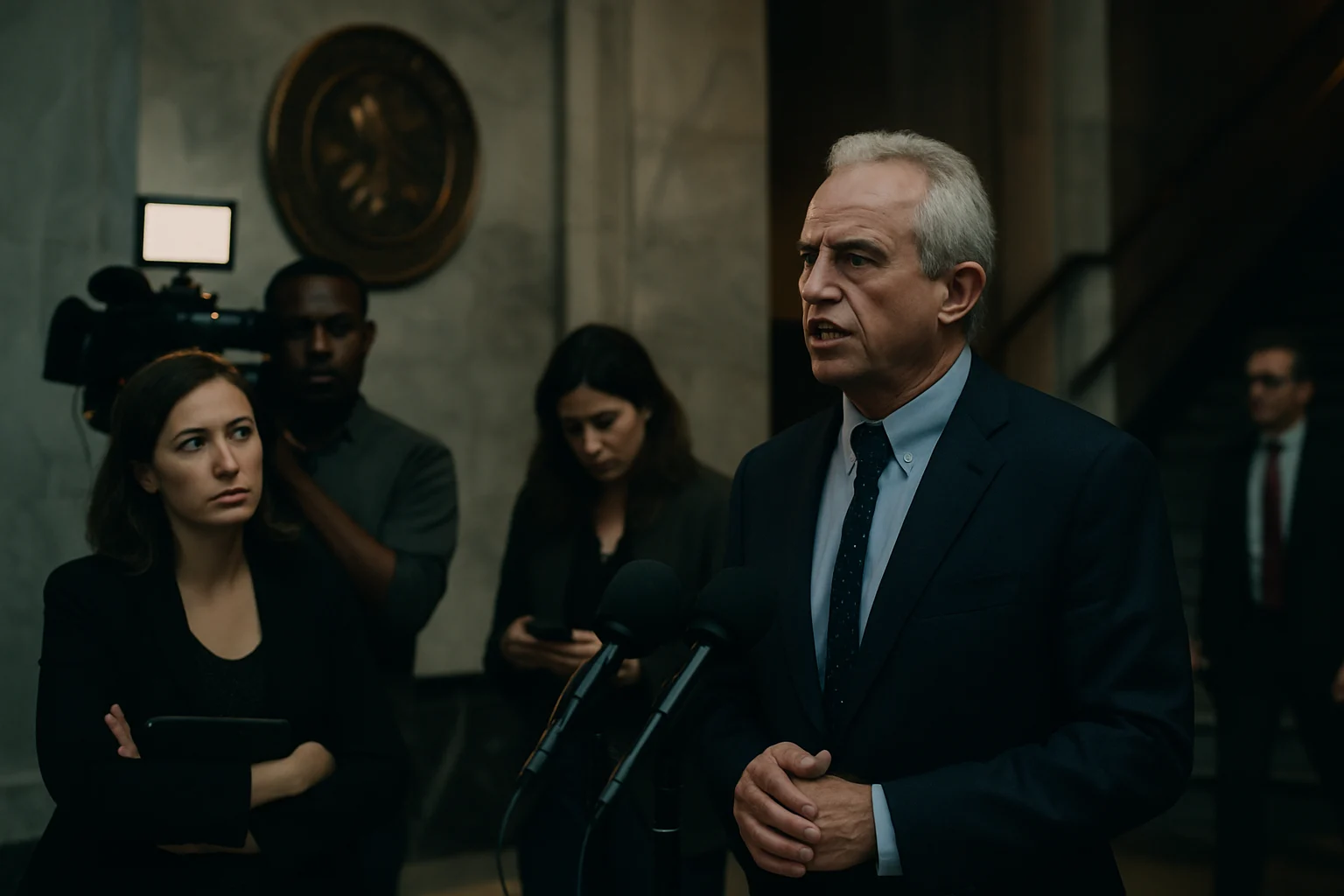
Todd Blanche’s Career as a Case Study in Legal Power Dynamics
Blanche’s trajectory from SDNY prosecutor to private defense attorney to acting AG covers about two decades of American legal practice, and the arc illuminates something specific about how federal legal careers actually work in the current environment — as opposed to how civics textbooks describe them. (Related: 辛辛那提紅人 9-2 底特律老虎|MLB賽後戰報(2026-04-26))
The traditional DOJ leadership model assumed a separation between political loyalty and prosecutorial authority. That assumption was itself a product of specific historical moments: the Saturday Night Massacre during Watergate, the subsequent reforms to DOJ independence, and the norms that accumulated across the Reagan, Clinton, Bush, and Obama administrations. Those norms were never codified into hard statutory law. They were institutional conventions — which means they are susceptible to being set aside by an administration that treats them as optional.
Whether Blanche himself has exercised his acting AG authority in ways that depart from those conventions is a question that requires ongoing reporting to answer accurately. The memos his office has issued, the cases where DOJ has intervened or declined to intervene, and the specific staffing decisions he has made as acting AG are all part of the record that journalists covering the DOJ beat are actively tracking. The Federalist Society’s official biography of Blanche and contemporaneous reporting from outlets with DOJ correspondents — including the Washington Post, Reuters, and the Associated Press — are the most reliable starting points for readers who want to follow that record as it develops.
What the biographical record alone can tell us is this: Blanche arrived at the DOJ with a prosecutorial background that is genuinely substantive, a private practice that placed him at the center of some of the most complex federal criminal defense work of the past decade, and a prior relationship with the sitting president that has no direct precedent in the post-Watergate era of DOJ leadership. Those three facts together define the institutional context in which his tenure will be evaluated — by legal scholars, by the press, and eventually by history.
Frequently Asked Questions About Todd Blanche
How did Todd Blanche become acting AG without a second Senate confirmation vote?
Blanche became acting Attorney General through automatic DOJ succession, not a separate confirmation. He was Senate-confirmed as Deputy Attorney General on March 6, 2025. Under longstanding DOJ succession protocols — codified in 28 U.S.C. § 508 — the Deputy AG automatically assumes acting AG authority when the AG position becomes vacant. This means the Senate’s prior confirmation of his Deputy AG role was sufficient to grant him acting authority. A separate confirmation vote would only be required if he were nominated for a permanent, non-acting appointment as AG.
What is the difference between Todd Blanche’s Senate confirmation hearing and a typical AG confirmation?
Blanche’s confirmation hearings for Deputy AG in early 2025 were substantively different from a standard AG confirmation in one key respect: senators were questioning someone whose most recent public role was actively defending the president who nominated him in criminal court. Standard Deputy AG confirmations typically focus on prosecutorial philosophy and management capacity. Blanche’s hearings included extensive questioning about recusal obligations, conflict-of-interest protocols, and whether he could exercise independent judgment in matters where Trump’s personal or political interests were implicated. The hearing transcripts are publicly available through the Senate Judiciary Committee’s official records.
Why do searches for “todd blanche epstein” generate so many results if there’s no confirmed connection?
Search volume reflects public anxiety about institutional access, not documented personal connection. As acting AG, Blanche controls the DOJ’s posture on any federal matters touching the Epstein case — including FOIA litigation, potential record releases, and the pace of any ongoing federal inquiries. That institutional authority is what drives search interest. No credible investigative outlet, including the Miami Herald, ProPublica, or the New York Times, has reported a personal or professional link between Blanche and Epstein or Maxwell. The distinction between institutional concern and personal allegation matters significantly for accurate public understanding.
What specific policy decisions has Todd Blanche made as acting AG that are publicly documented?
As of late April 2026, the acting AG memos and specific policy directives issued under Blanche’s tenure were subjects of active DOJ press coverage. Documented areas of reported activity include guidance on federal marijuana enforcement policy — relevant given the Trump administration’s moves on marijuana reclassification that generated market coverage in outlets including CNBC and Barron’s in early 2026 — and personnel decisions across U.S. Attorney offices. For the most current and sourced account of specific Blanche-era DOJ decisions, the Reuters and AP DOJ wire beats, as well as the Washington Post’s justice desk, maintain the most consistently sourced reporting. This article does not attempt to summarize policy decisions that are still actively developing and where the primary documentation continues to emerge.
Blanche’s tenure as acting AG is an ongoing story with a primary-source paper trail that will continue to grow. The Senate Judiciary Committee’s oversight function, active FOIA litigation by press organizations, and the DOJ’s own press releases all generate documentation that serious readers can track directly. If you follow legal journalism, the reporters at PBS NewsHour and the major wire services have covered Blanche’s career with primary-source depth — their archives are the right place to start for anyone who wants to go beyond the biographical summary this piece provides.
 美國即時熱搜
 美國即時熱搜
 美國即時熱搜
 運彩
運彩
 日本即時熱搜
 台灣即時熱搜
 越南即時熱搜
 台灣即時熱搜